





Yoga has existed for thousands of years, yet each time we step on the mat it can feel like we’re discovering something entirely new.
We move, we breathe, we balance, we wobble, we stretch, and sometimes we surprise ourselves with a sense of ease or spaciousness we didn’t expect. For some people yoga feels like coming home to their bodies. For others, especially beginners, it can feel confusing, mysterious, or even intimidating. But the truth is that yoga belongs to everyone. It is not reserved for the flexible, the athletic, the spiritual, the young, or the experienced. It is a practice shaped entirely around the individual.
This article is designed to be a welcoming, friendly, and down-to-earth introduction to yoga, paired with the excellent anatomical demonstration offered by Dr. Constance Bradley in her video on the major muscles involved in yoga postures. Her tutorial provides a clear view of what the muscles actually do as we move through postures. This blog offers the bigger picture: what yoga is, why it matters, and how anyone — absolutely anyone — can begin or deepen their practice.
Yoga is both simple and vast. It is about breath, attention, awareness, movement, strength, release, and connection. It is about learning the language of your own body and responding with kindness rather than force. It is a method for becoming more at home in yourself, whether you are sitting at a desk, walking up the stairs, lifting children or groceries, preparing for sleep, or navigating stress. What Dr. Bradley’s video beautifully shows is that yoga is also deeply physical: major muscles contract, lengthen, stabilise, and coordinate in ways that make postures possible. Understanding this can help you feel more confident, more grounded, and more capable as you learn.
Yoga begins with breath, because breath is the gateway to awareness. When we take a slow breath in and let it out with intention, something inside us shifts. The nervous system becomes less reactive. The shoulders soften. The jaw unclenches. Even the muscles that Dr. Bradley highlights — the pectorals, the rotator cuffs, the spinal extensors, the glutes, the hamstrings — respond directly to the state of the breath. A steady breath allows them to open, stabilise, or contract in a safer, more organised way. You might not realise it, but when you breathe slowly in mountain pose, your diaphragm moves through its full range, the intercostal muscles lift the ribs, and your spine finds a more natural alignment. In this way, yoga always begins with the simplest movement we have: the rising and falling of breath.
One of the most beautiful things about yoga is that you do not need to be flexible to begin. Flexibility is not a requirement for yoga — it is a possible result of the practice, and even then, only one of many. People of all ages, shapes, sizes, and fitness levels come to yoga for different reasons. Some want to reduce stress. Some want to move with less pain. Some want a form of exercise that feels kind and intuitive. Others are curious about the mind-body connection or want to explore balance and strength in a new way. All of these reasons are valid, and yoga accommodates them because yoga adapts to the person, not the other way around.
Dr. Bradley’s anatomical breakdown is especially encouraging for beginners because it reveals that yoga is far more than stretching. For instance, when her model moves from upward plank into chaturanga, the pectoralis major contracts powerfully while the triceps and biceps work in an elegant agonist-antagonist relationship. In crow pose, the rotator cuff muscles stabilise the shoulder in external rotation while the core engages to support balance. In tree pose, the gluteus medius fires to hold the pelvis steady over one standing leg. These are not superficial movements. They are coordinated, purposeful, functional, and incredibly strengthening.
When beginners see a challenging posture, they sometimes imagine that success depends on flexibility alone. But what Dr. Bradley shows is that strength, stability, and neuromuscular awareness are equally essential. And here is the secret: those qualities build quickly once you begin practising. Yoga is not about touching your toes; it is about learning which muscles help you move, which ones stabilise you, and which ones need time and softness to lengthen. With practice, you develop a conversational relationship with your own body.
The physical benefits of yoga are expansive and well-documented. A regular practice improves joint mobility, muscular balance, cardiovascular capacity, and proprioception — which is your ability to sense where your body is in space. Proprioception matters more than most people realise. It helps you navigate uneven surfaces, keep your balance while reaching or bending, maintain alignment in daily tasks, and prevent falls or injuries. When Dr. Bradley demonstrates how the tibialis anterior shortens in dorsiflexion or how the hamstrings lengthen eccentrically in forward fold, she is teaching more than anatomy; she is showing how yoga refines proprioception. You begin to sense the length of your hamstrings, the position of your pelvis, the engagement of your quadriceps, or the expansion of your rib cage long before you look in a mirror. Yoga trains your internal perception.
Beyond physical conditioning, yoga offers significant mental and emotional benefits. This is one of the reasons it has gained such widespread acceptance in clinical settings and wellness programmes. The combination of breath, movement, mindfulness, and present-moment attention shifts the body into a calmer state. The nervous system becomes less reactive, and the stress response becomes easier to regulate. Many people find that yoga increases resilience. It does not eliminate stress, but it gives you tools to respond to it with intention rather than tension.
This mental clarity is not separate from the physical body — the two are deeply intertwined. When the spine lifts into extension, as shown in bow pose, or when the shoulders stabilise through external rotation during arm balances, the nervous system calibrates itself. Precise, purposeful movement encourages a sense of internal coherence. Over time, this develops into something yogis often describe as groundedness. You feel more centred and less scattered. Everyday problems feel more navigable because your internal system feels steadier.
Another key benefit of yoga is its adaptability. If you are young and energetic, yoga offers dynamic strength and mobility training. If you are older or dealing with joint pain, yoga can be modified into slow, restorative, or chair-based variations. If you are recovering from an injury, yoga can help rebuild movement patterns gradually and safely. If you are dealing with anxiety, insomnia, or overwhelm, the breath-centred practices support the parasympathetic nervous system and promote rest. If you are training for sport or athletic performance, yoga improves coordination, muscular sequencing, and recovery.
Dr. Bradley’s demonstration of major muscles is a wonderful reminder that yoga is not mystical or inaccessible — it is incredibly practical. The pec minor stabilises and depresses the scapula. The serratus anterior rotates it forward. The rotator cuff maintains integrity of the glenohumeral joint during wide ranges of motion. The erector spinae group supports extension while the rectus abdominis transitions into flexion. The gluteus medius steadies the pelvis during standing postures. The hamstrings and quadriceps work as synergists and opposers depending on the movement. All of these muscles behave in ways completely familiar to anyone with basic anatomical training. Yoga becomes less intimidating once you realise that it is simply a well-organised system of muscular actions, breath patterns, and mindful attention.
This is why yoga integrates so beautifully into everyday life. You do not need an hour-long class or a special mat. You can practise yoga while waiting for the kettle to boil by standing tall and letting your breath drop into your ribs. You can practise yoga while sitting at your desk by lengthening your spine and softening your shoulders. You can practise yoga while walking by paying attention to the strike of your heel and the lift of your foot, noticing how your gluteus medius supports each step. You can practise yoga while lifting a grocery bag by engaging your core and breathing steadily. Yoga is not a separate event; it is a way of inhabiting your body with awareness.
This brings us to one of the most transformative aspects of yoga: the slow shift from external achievement to internal experience. Many beginners feel pressure to “get” certain poses, to look a certain way, or to emulate what they see in photos or videos. But authentic yoga is not concerned with what you achieve on the outside. It is concerned with how you feel on the inside. When Dr. Bradley’s model demonstrates forward fold, backbend, twist, or balance, the emphasis is not on performance. It is on understanding the muscular actions that make the movement possible. This is the heart of yoga: experiencing your own body more clearly.
When you practise yoga with awareness, you become gentler with yourself. You notice early signs of fatigue or tension. You sense when a muscle is gripping unnecessarily. You learn to relax the facial muscles, soften the tongue, quiet the breath, and adjust the posture so it supports you rather than strains you. Over time, this self-attunement becomes second nature. It carries into daily life, shaping the way you respond to challenges. A difficult conversation may feel less overwhelming because you’ve learned, through yoga, how to stay connected to breath and body even during discomfort.
Another important element of yoga is patience. Unlike fast-paced workouts that rely on intensity and repetition, yoga thrives on slow progress. Flexibility improves gradually. Strength builds quietly. Balance sharpens one breath at a time. The eccentric contractions that Dr. Bradley highlights in postures like floor bow or forward fold train the muscles to lengthen under control. These are not quick gains; they are steady adaptations that encourage longevity and resilience in the tissues.
This is particularly helpful for people who feel their bodies have “aged out” of certain activities. Yoga has no age limit. I have taught students in their seventies who gained more mobility in a year of yoga than they had in the decade before. I have taught students who believed they were “too stiff,” only to watch them rediscover strength they thought they had lost. And I have worked with students recovering from injuries who learned to trust their bodies again. Yoga does not demand perfection; it invites exploration.
The breath-movement synchronisation inherent to yoga also improves emotional regulation. When you move into a posture like warrior two, the psoas works dynamically to control the hip. As you settle into the pose, the breath lengthens the spine, broadens the chest, and calms the nervous system. The body and mind begin working together rather than against each other. This is why so many people report feeling lighter, clearer, or deeply refreshed after yoga. It is not simply the physical stretching. It is the integration of breath, awareness, and muscular action.
One of the most surprising benefits of yoga is its ability to reveal patterns of tension or imbalance. Many people do not realise how much tension they carry in the shoulders, hips, or lower back until they begin yoga. When Dr. Bradley demonstrates the trapezius lengthening in eagle pose or the rhomboids contracting in locust pose, she is illuminating these patterns. Yoga helps you uncover where you habitually tighten, where you overuse, and where you underuse. Once you recognise these patterns, you can release them.
Beginning yoga is easier than most people think. You do not need expensive clothing or equipment. A mat is helpful but not essential. What you truly need is the willingness to try. The rest unfolds naturally. Many beginners worry about doing something “wrong,” but yoga is not like solving an equation. There is rarely one absolute correct way to perform a posture. There is instead a range of alignments, each suitable for different bodies. Yoga teachers talk about finding your version of a posture. That version may change daily depending on energy, stress, hydration, injury, or mood. Yoga meets you where you are.
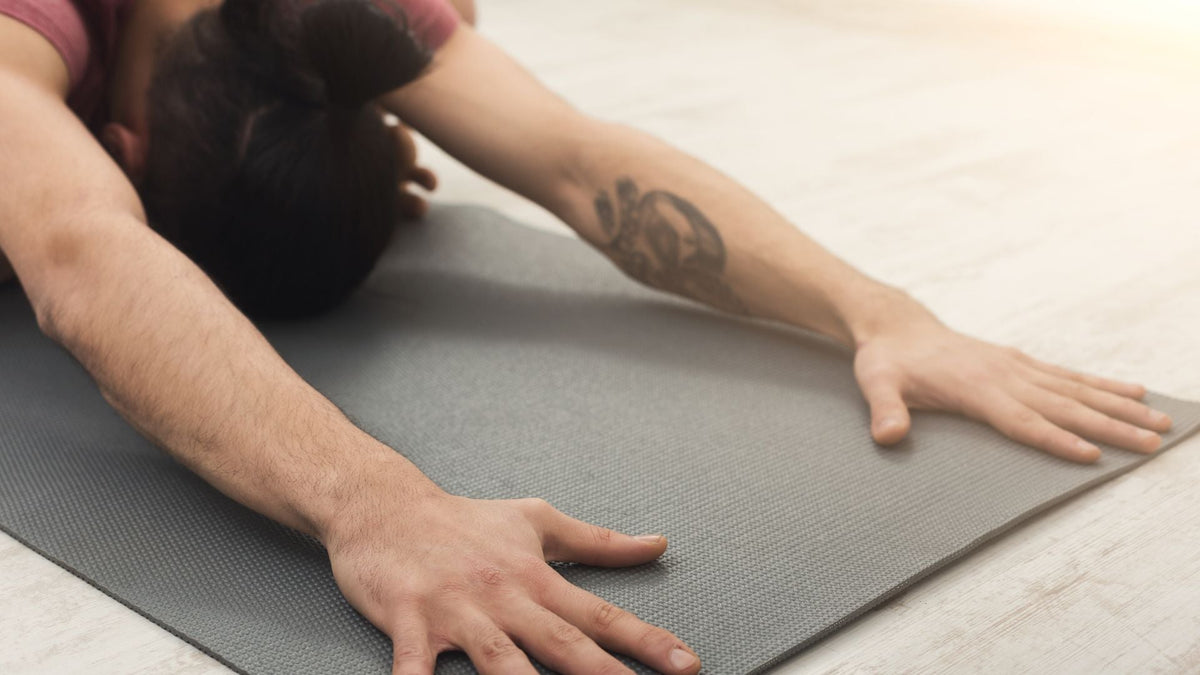
A gentle way to start is by choosing two or three simple postures and practising them for a few minutes each day. Mountain pose teaches alignment. Cat-cow mobilises the spine. Child’s pose restores the nervous system. Bridge pose activates the glutes and lengthens the hip flexors. Downward dog gently stretches the posterior chain. These shapes become familiar pathways that lead to more advanced variations when you are ready. And for many people, these foundational postures remain part of their lifelong practice because they continue to offer insight and comfort.
For those worried about balance or mobility limitations, yoga offers countless modifications. Postures can be done with blocks, bolsters, straps, chairs, or even against the wall. What matters is not how far you go into a posture, but how you feel in it. Dr. Bradley’s anatomical explanations help demystify the process. When you understand which muscle stabilises, which contracts, and which lengthens, you realise that yoga is not a test of flexibility but a conversation between brain and body.
Strength is another meaningful benefit of yoga. Many people do not associate yoga with strength training, yet it can build powerful, functional strength without heavy impact. When you hold plank, chaturanga, or chair pose, the entire muscular system coordinates. The core stabilises, the shoulders anchor, the legs engage, and the breath fuels the effort. Even seemingly gentle postures like tree pose, which relies on gluteus medius engagement for balance, develop strength that supports everyday movement. Over time, this strength protects the joints, stabilises the spine, and reduces risk of injury.
Yoga also encourages a kinder relationship with your body’s limitations. Rather than forcing the body into compliance, yoga teaches you to work with what your body offers on any given day. This fosters self-respect and reduces the internal pressure many people feel in fitness environments. It becomes less about achieving and more about experiencing. You begin to notice small victories: deeper breath, steadier balance, smoother movement. These changes accumulate into meaningful growth.
Perhaps one of the greatest gifts of yoga is its inclusivity. Yoga adapts to people with chronic pain, anxiety, depression, hypermobility, stiff joints, or high stress. It supports athletes, office workers, parents, older adults, and individuals recovering from illness or injury. No matter your circumstances, yoga provides a doorway to greater strength, comfort, and awareness.
The video by Dr. Constance Bradley is an excellent technical companion to this exploration. Seeing how the muscles behave in specific postures enhances your understanding of yoga as a whole. It reminds you that each pose is a coordinated action involving multiple muscle groups working harmoniously. When you see the pec major contract in chaturanga or the iliopsoas activate in warrior, you understand that yoga is an organised expression of anatomy. The more you learn, the more your practice becomes empowered, confident, and embodied.
But even as you learn the mechanics, remember that yoga ultimately leads inward. It helps you pause before reacting, breathe before tensing, move with intention rather than habit. It helps you cultivate clarity. It helps you become aware of how you inhabit your body and how your body responds to your life.
Yoga is for everyone because it meets you exactly where you are. It welcomes your stiffness, your anxiety, your strength, your curiosity, your fatigue, and your hopes. It welcomes you on good days and on difficult days. What matters is that you show up for yourself. You breathe. You move. You feel. You learn. This, in essence, is yoga — the ongoing process of connecting to yourself with patience, knowledge, and kindness.
If you are new, begin gently. If you are returning, welcome yourself back. If you are deepening your practice, explore with curiosity. Yoga is a lifelong companion, always ready to support you, challenge you, quiet you, and strengthen you in ways that ripple far beyond the mat.
And as you watch Dr. Bradley’s clear, thoughtful breakdown of muscle actions in yoga, allow yourself to appreciate the brilliance of your own body — how it contracts, lengthens, stabilises, balances, and breathes. That intelligence is always within you. Yoga simply helps you listen to it more deeply.