



OUMERE Laboratory — Active Ingredient Review
A cellular biologist’s analysis of why fewer, stable actives outperform overloaded routines built on unstable vitamin C serums, daily acids, and marketing-driven ingredient lists.
Quick Answer — Most skincare routines fail not because they lack “enough” active ingredients, but because they contain too many, in unstable forms, layered in ways that damage the barrier. Our commitment at Oumere Skincare is to use fewer, but more stable, active ingredients that align with skin biology rather than overwhelm it. Minimalist skincare with structurally meaningful actives is the most effective long-term anti-aging strategy.
From Cellular Biology to Oumere: My Origin Story
Before I founded Oumere, I was a cellular biologist studying how cells respond to their environment: oxidative stress, signaling molecules, DNA damage, and repair. In the laboratory, instability has consequences. A reagent that oxidizes, denatures, or decomposes does not simply “lose potency” — it can generate new, harmful species.
When I examined the cosmetic industry through that lens, the mismatch was obvious. Products were praised for how they felt in the first thirty seconds, not for how they influenced skin structure over months or years. “Active ingredients” were treated as marketing features, not as molecules with lifespans, degradation pathways, and downstream effects on the skin barrier.
The Problem with the Skincare “Treadmill”
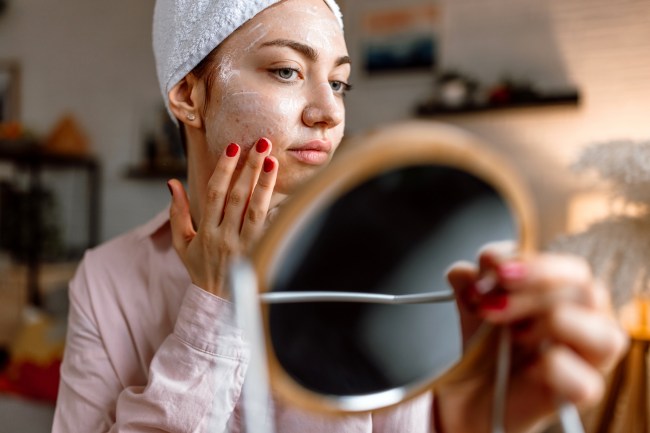
Most people arrive at Oumere after years on what I call the skincare treadmill:
- New serums every season, each with a longer ingredient list than the last.
- Layered vitamin C, multiple acid toners, retinoids, niacinamide, peptides — often twice a day.
- Temporary smoothness followed by redness, breakouts, or sensitivity, leading to yet another product to “fix” the reaction.
The routine becomes more complex while the skin becomes less stable. The number of actives increases; the quality and compatibility of those actives rarely do.
Redefining “Active”: Stability Over Sensation
In biology, an active molecule is one that can reach its target, remain intact long enough to interact with it, and produce a controlled effect. In cosmetics, “active” is often shorthand for anything that stings, tingles, or smells potent.
True activity depends on stability and delivery, not on sensation:
- A molecule that oxidizes in the bottle or on contact with air is not active; it is decomposing.
- A formula that strips the barrier may feel transformative but often reflects uncontrolled chemistry rather than targeted repair.
Oumere’s philosophy is simple: fewer actives, chosen for structural impact and long-term stability, will always outperform crowded formulas built to impress an ingredient list rather than a microscope.
Ingredient Instability: The Hidden Damage of Unstable Actives
Many highly marketed active ingredients are chemically unstable in water-based, oxygen-exposed cosmetic systems. Instability does not just mean the product “stops working” — it means the formula is actively changing into something else, often into molecules that promote oxidative stress instead of reducing it.
Two patterns dominate most routines that come to Oumere for repair: oxidized vitamin C serums and chronic multi-acid use.
Why Your Vitamin C Serum Turns Yellow
Most “brightening” serums are built around L-ascorbic acid, the reduced form of vitamin C. In aqueous, oxygen-exposed formulas, L-ascorbic acid is highly unstable. It readily oxidizes to dehydroascorbic acid and further breakdown products.
When your vitamin C serum turns from clear to yellow or orange, you are seeing oxidation products accumulate. These species can behave as pro-oxidants, generating free radicals in the presence of metal ions and light. On the skin, this can translate into:
- Increased oxidative stress instead of protection.
- Compromised lipid membranes in the stratum corneum.
- Hyperpigmentation and irritation in sensitive individuals.
For this reason, Oumere avoids unstable vitamin C serums entirely. We do not ask the skin to act as a chemical waste bin for oxidized actives.
The Cumulative Damage of Too Many Acids
Alpha-hydroxy acids (AHAs), beta-hydroxy acids (BHAs), and polyhydroxy acids (PHAs) are useful in controlled contexts. The problem is not their existence; it is the way they are stacked. The No. 9 should be used on its own with the OUMERE Serums, not stacked with outside products that have harsh, sloppy formulations that destroy the skin barrier.
Daily acid cleanser + acid toner + acid serum + acid mask creates a state of permanent disruption in the stratum corneum:
- Lipid bilayers are repeatedly solubilized before they can fully reorganize.
- Corneodesmosomes are degraded faster than they can be remodeled.
- Subclinical inflammation becomes chronic, accelerating extrinsic aging.
Skin that looks “glass-like” for a few months often becomes thin, reactive, and uneven years later. The price of constant sensation is structural debt.
Oumere Skincare: Replacing 10 Products with 3 Core Biological Supports
Oumere Skincare was designed to remove the noise from a routine. Instead of ten overlapping products, each with a dozen loosely chosen actives, Oumere uses a small set of formulations built around three core supports:
Support I
Defense
Protection against UV-induced and environmental damage using DNA-supportive and antioxidant strategies that respect skin structure.
Support II
Controlled Renewal
Biologically intelligent exfoliation that keeps desquamation orderly without destroying the barrier.
Support III
Barrier Architecture
Skin-mimicking lipids and humectants that stabilize lamellae and maintain long-term hydration.
Each Oumere formula exists to serve one of these supports. We do not add actives because they are trending. We add them when they perform a defined structural function.
Product Spotlight: The UV-R Approach to Defense
Most sunscreens are designed as shields: they sit on the surface, absorb or reflect UV, and often rely on heavy vehicles that clog pores or irritate sensitive skin. UV-R was developed differently.
UV-R combines photoprotective strategies with ingredients chosen for their roles in supporting the skin’s own repair processes. Rather than simply blocking light, the formula is engineered to:
- Reduce the formation of UV-induced free radicals.
- Support DNA repair mechanisms that operate after exposure.
- Maintain the integrity of the lipid barrier so defense does not come at the cost of long-term dryness or congestion.
The result is a defense system that behaves more like a biological extension of the skin and less like a plastic film.
How Our No. 9 Moisturizer Preserves the Barrier
A moisturizer should not be a fragrance delivery system or a vehicle for twenty unrelated actives. It should be an analog of the barrier it is meant to support. No. 9 Moisturizer is built on that premise.
Instead of silicones and occlusive fillers, No. 9 uses a tight selection of lipids and humectants that echo the skin’s natural composition. The formulation strategy focuses on:
- Lipid architecture: Providing ceramide-like and fatty acid structures that integrate with existing lamellae.
- pH compatibility: Maintaining an acid mantle-friendly pH so enzymatic processes remain in balance.
- Stability: Avoiding unstable actives that would oxidize and undermine the very structure the moisturizer is meant to protect.
Used consistently, a barrier-preserving moisturizer becomes more effective than a cabinet full of conflicting treatments.
Oumere was not built for dramatic “before and after” photos captured in a two-week window. It was built for structural changes that appear over months: calmer skin, fewer products, and a barrier that no longer oscillates between dryness and breakout.
Why the Oumere Difference is Consistent, Not Dramatic
Many negative reviews in skincare stem from mismatched expectations. A product is applied, it tingles, peels, or “does something dramatic,” and that sensation is interpreted as efficacy. When a formula instead works quietly — stabilizing pH, protecting lipids, reducing the need for constant correction — the results are less theatrical but far more reliable.
Oumere’s actives are designed to be consistent: stable in the bottle, predictable on the skin, and compatible with long-term use. The absence of drama is intentional.
Seeing is Believing: Discussions from user experience
Because Oumere was built from a research background, we value longitudinal feedback rather than single-use impressions. In community spaces s users share multi-month experiences with the line: reduced product counts, more resilient skin, and the ability to stop chasing every new active.
Conclusion: Minimal, Stable, Biological
The modern skincare routine is often a chemistry experiment without a hypothesis: too many unstable actives, applied too frequently, in combinations that were never tested together. From a cellular biology perspective, this is not sophistication; it is noise.
Oumere takes the opposite approach. We use fewer active ingredients, chosen for their stability, structural impact, and compatibility with the skin’s own architecture. Minimalist skincare is not about doing less for the sake of simplicity; it is about doing only what biology can sustain.
Ready to simplify your routine and move from sensation to structure?
Editor’s Lab Note: This article is part of the Oumere Active Ingredient Review series, examining common cosmetic actives from a cellular biology perspective. The guiding principle is that an ingredient is not “active” unless it is stable, structurally relevant, and compatible with long-term barrier health.