





spleen tissues and disrupt their normal functions. People with this
disease are hence at a higher risk of infection.
Hereditary spherocytosis: It’s a condition
that affects red blood cells. People with hereditary spherocytosis
experience a shortage of red blood cells as they are destroyed earlier
than normal by the spleen. The gene mutations that cause red blood cells
to be misshapen are called spherocytes that are taken out of
circulation and sent to the spleen to be removed. When this keeps
happening, it causes a shortage of red blood cells and too many in the
spleen.
Cancer: The spleen is the largest lymphatic organ in the body and is
surrounded by a connective tissue capsule. It can also be connected with
lymphomas or cancer of the lymphatic system as well as blood cancers
such as Hodgkin’s disease and leukemia.
Thalassemia: The spleen helps produce blood cells before birth. In
people with thalassemia, an inherited blood disorder, the bone marrow is
unable to make red blood cells normally. This causes the spleen to
enlarge to produce more red blood cells.
Bacterial, viral, and parasitic infections: If the spleen does not
function properly, you are at a bigger risk from bacterial, viral, and
parasitic infections. This is simply because the spleen is responsible
for getting rid of harmful bacteria from the blood. In many viral
infections, the spleen becomes enlarged which can cause infections such
as syphilis, tuberculosis, endocarditis, mononucleosis (mono), and
malaria.
Enlarged Spleen
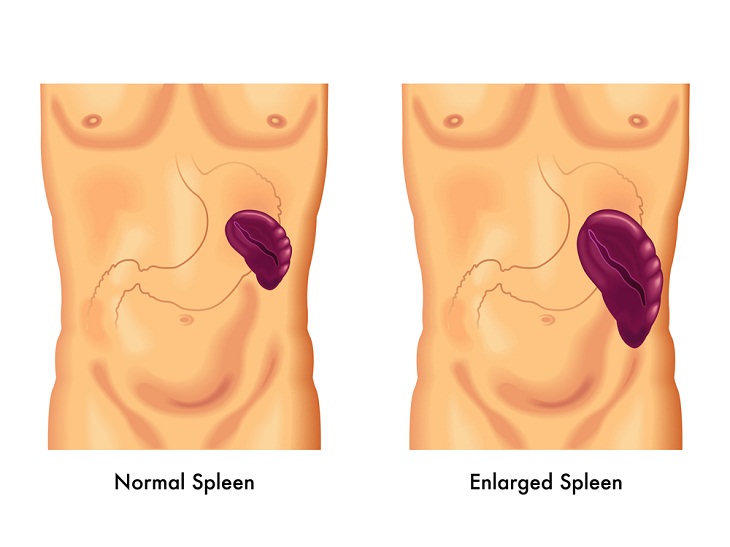
Your spleen may become enlarged (a
condition called splenomegaly) if it can’t filter your blood as
efficiently as it’s used to. This primarily happens due to several
different medical conditions or diseases that cause blood cells to break
down too quickly such as cirrhosis, leukemia, or rheumatoid arthritis.
An enlarged spleen traps an excessive amount of blood cells and
platelets and may start destroying healthy red blood cells as well. This
condition can lead to a significant reduction of healthy blood cells
and platelets in your blood as your spleen becomes clogged.
An enlarged doesn’t always show symptoms at first. But you should look
out for these signs:
* Feeling discomfort or pain behind your left ribs
* Feeling too full quickly without eating too much. This happens because
an enlarged spleen can press on the stomach.
* Frequent infections.
* Fatigue or anemia.
* Easy bleeding
If it enlarges too much without being detected, the spleen can be
damaged or ruptured after a forceful blow to the abdomen. This may cause
acute pain behind your left ribs and you would require your spleen to
be removed.
How to Treat an Enlarged Spleen
Your doctor can often tell if you have an
enlarged spleen by touching the area around your abdomen. A blood test,
CT scan, or MRI scan would verify the diagnosis.
If you are diagnosed with an enlarged spleen, you are likely to be first
given antibiotics to treat the underlying condition that may have
caused the issue. However, a severe infection may not respond to
antibiotics and can lead to inflammation and a buildup of pus. In such a
scenario, your spleen may need to be removed. Surgery may also be
needed if doctors are unable to find out the cause of your spleen
enlargement.
The surgery to remove your spleen is called a splenectomy. Sometimes
just part of your spleen can be removed if needed, which is called a
partial splenectomy. Recovery from this surgery usually takes around
four and six weeks.
Can You Live Without Your Spleen?
After your spleen is removed, you are left
with a compromised immune system and are at greater risk of bacterial
infections. Does that mean you can’t live normally without a spleen?
While the spleen is an important part of the body, you can indeed live
without your spleen if it’s damaged by disease or injury. Your liver and
lymph nodes take over the job of the spleen after it’s removed from
your body. That being said, you may develop certain infections quickly
and are likely to take longer than usual to recover after getting sick
without your spleen.
Your doctor may ask you to get vaccinated against certain infections to
lessen your risk. Some of these include:
* Influenza
* Meningitis
Chickenpox
* Tetanus, diphtheria, and whooping cough
* Measles, mumps, and rubella
* Pneumonia
If you are an otherwise healthy adult, you can lead a normal life even
without your spleen. Consult with your doctor to devise a long-term plan
to stay healthy after your spleen is removed.
How Do I Keep My Spleen Healthy?
Currently, there’s not much research on how your diet can affect your
spleen. There are also no recommendations on specific foods you should
avoid to reduce the risk of developing an enlarged spleen. However, a
healthy diet affects your overall health and keeps your immune system
robust. Therefore, to keep your spleen and immune system in good shape,
you should exercise regularly, maintain a healthy weight, and drink
plenty of water, health experts say. Eating a balanced diet abundant in
fruits and vegetables will be beneficial as well.