


[ad_1]
December 05, 2025
3 min read

Key takeaways:
- Only 13% of survey respondents considered the CDC to be a trusted source for vaccine information.
- Vaccine uptake for COVID-19, flu and RSV was lower in 2025 vs. 2024.
Fewer people have gotten vaccinated against respiratory illnesses this season vs. last, according to survey data presented by experts this week, with many respondents citing unclear guidance as a reason why.
As part of a series of press briefings on respiratory season data, the National Foundation for Infectious Diseases (NFID) shared the results of a survey assessing the beliefs, attitudes and practices surrounding vaccines for respiratory diseases.

Data derived from NFID.
The NFID surveyed more than 1,000 U.S. adults from a pool of volunteers meant to reflect the U.S. adult population. Overall, the survey revealed that only 45% of respondents received at least one respiratory vaccine since September. The highest uptake was for vaccines for influenza (34%) COVID-19 (25%), with pneumococcal and respiratory syncytial virus lagging far behind (8% and 6%, respectively).
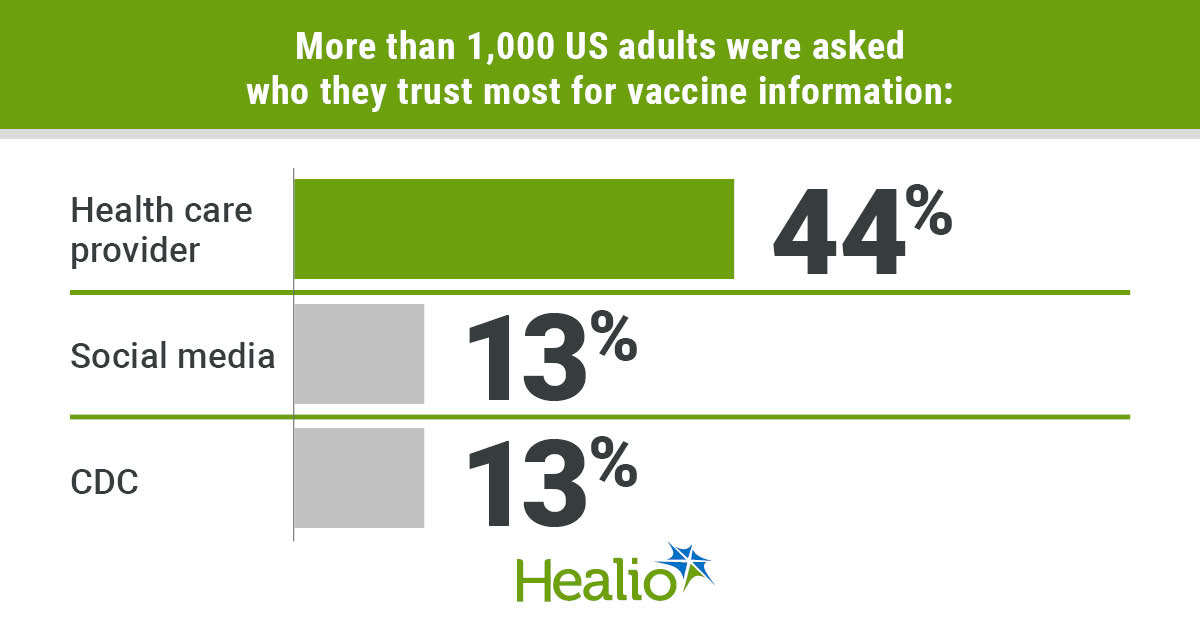
When asked what they would consider their most trusted source for vaccine information, 44% of respondents said health care professionals. The CDC and social media were tied at 13% for the second most trustworthy source among respondents aged 18 to 24 years, which the study called “an emerging generational shift in trusted sources.”
Fomer CDC Director Tom Frieden, MD, MPH, president and CEO of Resolve to Save Lives, said during the NFID briefing that the findings demonstrate how important it is that health care professional learn to speak and collaborate with “effective messengers.”
“We need to go where people are. We need to collaborate with influencers who are prominent in social media,” he said. “It’s possible to promote reliable information.”
Rochelle P. Walenksy, MD, MPH, professor of medicine at Harvard Medical School and also a former CDC director, said it was “jaw dropping” to see the low percentage of people who view the CDC as a trusted source for vaccine information.
“That website was sacrosanct regarding the data that got put on it. It was vetted heavily by subject matter experts for both clarity and accuracy and updated routinely when new data became available,” she said. “It’s been really disturbing to see what I’ll call a ‘hijacking’ of that website by people who are posting things that are not cleared by subject matter experts within the CDC and I think that’s part of the issue.”
[Editor’s note: Findings from the survey were announced the same week the CDC’s vaccine advisors voted to no longer recommend the hepatitis B virus birth dose for all newborns.]
The NFID survey also evaluated the key barriers for getting vaccinated. Data showed 16% of respondents had not received an influenza vaccine due to safety concerns about vaccine side effects, whereas 13% said they “never get sick.”
The survey showed similar findings for COVID-19 vaccines, with 20% of respondents citing side effects and 12% saying their health care provider had not recommended the vaccine. Side effects and a lack of recommendation from a health care professional were also the top reasons cited as barriers for pneumonia (10% and 17%) and RSV (11% and 18%) vaccinations.
The survey also revealed that 44% found guidance on respiratory vaccinations to be unclear to some degree, leading them to not receive the vaccines.
“These insights underscore the complexity of this season and the urgency of providing people with clear, evidence-based information to help inform their decisions to get vaccinated,” NFID medical director Robert H. Hopkins, MD, said.
The NFID shared data comparing respiratory vaccine uptake in 2024 vs. 2025 administered via pharmacy, mail order or in long-term care settings, which showed that fewer vaccines were administered in 2025.
Specifically, the data showed COVID-19 vaccinations decreased from 24.2 million doses to 17.8 million doses (27% decrease), RSV vaccinations decreased from 2.4 million doses to 1.6 million doses (34% decrease) and influenza vaccinations decreased from 34.4 million in 2024 to 32.4 million doses (6% decrease).
Pneumococcal conjugate vaccination increased from 1.5 million doses given during the study period in 2024 to 2 million in 2025, marking a 27% increase.
“These numbers aren’t just statistics. They represent real gaps in protection that could translate into more illness, more hospitalizations and loss of lives,” Hopkins said. “That’s why today’s conversation matters.”
Walensky closed out her comments during the briefing by urging everyone to receive their respiratory vaccinations this season.
“We know that we are heading into a respiratory virus season, and people are anticipating a potentially bad flu season,” she said. “Last year, we had more pediatric deaths from influenza than we’ve had in the last 15 years, and among the most important things that you can do to protect yourself and your loved ones is to get a flu vaccine, a COVID vaccine and an RSV vaccine if you’re eligible.”
Sources/Disclosures
Source:
References:
Disclosures:
Frieden, Hopkins and Walensky report no relevant financial disclosures.

Ask a clinical question and tap into Healio AI’s knowledge base.
- PubMed, enrolling/recruiting trials, guidelines
- Clinical Guidance, Healio CME, FDA news
- Healio’s exclusive daily news coverage of clinical data
[ad_2]
Source link