




Patients newly diagnosed with rheumatoid
arthritis typically focus on managing joint pain, morning stiffness, and
selecting appropriate treatment. However, a significant American study
has uncovered a hidden threat: as early as the first year of the
disease, one in ten patients may be walking around with undetected lung
disease that could pose serious health risks.
The research, published in the medical journal The Lancet Rheumatology
and conducted across five medical centers in the United States, reveals
who faces the highest risk and how the condition can be identified early
using simple tools already available in routine clinical practice.
The study tracked patients in the early
stages of rheumatoid arthritis—within two years of diagnosis—and
discovered a surprising finding: already at the beginning of their
journey, 11% showed signs of interstitial lung disease (ILD) on
specialized CT scans (HRCT), even though the condition wasn’t
necessarily causing noticeable symptoms yet.
“Lung involvement is considered one of the most common and also the most
lethal complications, to the point of being life-threatening,” explains
Professor Shai Koyti, Director of the Rheumatology Unit at Meir Medical
Center, part of the Clalit health group. “Between 5% and 10% of
patients, depending on the study, develop autoimmune lung disease
alongside their joint disease.”
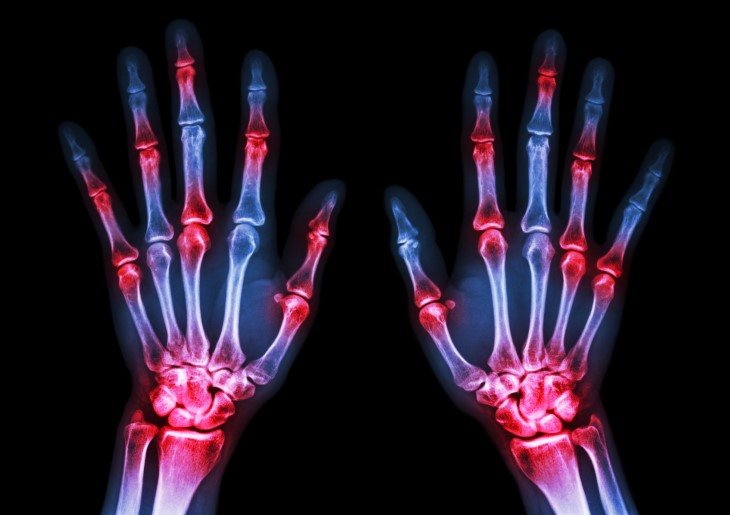
Rheumatoid arthritis is the most common
inflammatory joint disease and represents an autoimmune condition in
which the immune system mistakenly attacks the body. According to
Professor Koyti, the disease affects approximately 0.5% of the
population, primarily women, with an estimated 50,000 patients in
Israel. The disease primarily damages joint cartilage—especially in the
hands—causing swelling, inflammation, and without timely treatment, can
lead to joint destruction, severe deformities, and disability.
can involve additional organs, including the eyes, nervous system, skin,
and particularly the lungs,” Professor Koyti explains. He notes that
the risk is especially high among severe patients, including smokers.
However, he emphasizes that the treatment
landscape has changed dramatically in recent years: “Since the
introduction of biological therapies, we’ve changed the course of the
disease. In the past, people would become disabled, whereas today most
lead good, normal lives. It’s a 180-degree change.” According to him,
the lungs remain a challenging and relevant area specifically because
lung involvement can still be lethal and requires special attention.
Who is at Highest Risk?
The study included 172 patients who agreed to undergo comprehensive
testing: high-resolution chest CT scans, pulmonary function tests, blood
tests for disease-related antibodies, medical questionnaires, and
complete clinical examinations. Most participants were women (74%), with
an average age of 55.3, and two-thirds tested positive for antibodies
characteristic of rheumatoid arthritis (RF and CCP).
disease early in rheumatoid arthritis:
Patients with moderate to high disease
activity were seven times more likely to have interstitial lung disease
detected compared to those in remission or with low activity.
Patients aged 60 and above faced nearly four times the risk compared to
younger patients.
To determine whether lung disease could be
identified in time, researchers compared several conventional screening
methods, including joint guidelines from the American College of
Rheumatology and pulmonary specialists, as well as models built from
large follow-up studies tracking rheumatoid arthritis patients over
time.
The results showed that testing methods vary in effectiveness:
possible patient and are therefore considered highly sensitive, but lack
precision and generate many false positives. For example, the method
based on joint ACR-pulmonary specialist guidelines successfully
identified every patient with lung disease (100% sensitivity) but could
barely distinguish between actual patients and those who appeared
suspicious but weren’t actually ill—achieving only 11% specificity.
High specificity, low sensitivity: Other
methods are much more accurate but may miss patients. For instance, the
Paulin criteria—a scoring system based on multiple risk factors to
determine who needs testing—almost always correctly identifies when lung
disease is absent (97% specificity) but manages to identify only a tiny
fraction of patients actually suffering from it, with particularly low
sensitivity of just 5%.
Practical Implications for Clinical Practice
An additional finding that may help physicians is how many patients need
to be screened to find one case of lung disease. According to the
findings, the number is very small: between just 3.6 to 7.7 patients,
depending on the screening method used. This means that even simple
screening tests can detect the disease early, making it worthwhile to
incorporate them from the beginning of rheumatoid arthritis patient
monitoring.
ILD is one of the significant complications
of rheumatoid arthritis and can develop gradually without the patient
feeling almost anything initially. Early detection can greatly impact
treatment: it allows for medication adjustments, close monitoring of
lung function, and even prevention of dangerous deterioration.
The study’s findings clearly indicate that
monitoring rheumatoid arthritis patients should include attention to the
lungs from the first year, especially in older patients or those with
moderate to high disease activity.
Although dealing with early-stage rheumatoid arthritis, one in ten
patients already suffers from interstitial lung disease. Researchers
emphasize that these patients can be identified in time using simple
information already collected during regular rheumatologist visits—such
as patient age, disease activity level, blood test results, and
physician assessment. Combining this data can flag who needs to proceed
to advanced lung testing, such as CT scans.
Clinical Recommendations
Professor Koyti summarizes: “The important message is that when a
patient comes to a rheumatologist with rheumatoid arthritis, the doctor
should already suspect and detect possible signs of lung disease—such as
breathing difficulties or coughing. It’s possible and even desirable to
proactively search for the disease, detect it as early as possible, and
consider preventive treatment. This requires additional research, but
it’s certainly a very important topic.”
The research underscores the need for a holistic approach to rheumatoid
arthritis management, recognizing that what begins as a joint disease
can have serious systemic manifestations. With modern screening tools
and heightened clinical awareness, physicians can identify at-risk
patients early and intervene before lung disease becomes symptomatic or
life-threatening.
those over 60 or experiencing high disease activity, proactive lung
screening may be a critical component of comprehensive care—potentially
preventing one of the disease’s most serious and deadly complications.