


Last Updated on December 2, 2025 by Giorgia Guazzarotti

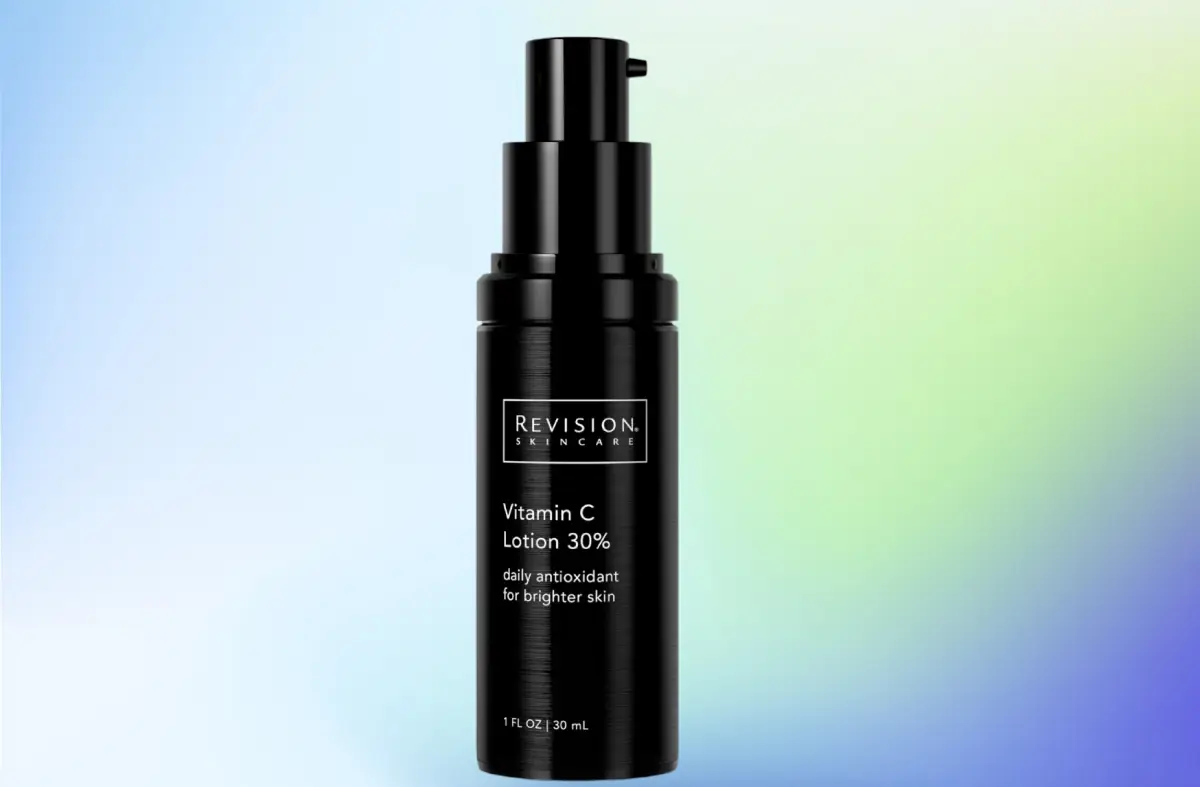
You ever buy a vitamin C serum, use it maybe three times, and then two months later you pull it out and it’s turned this weird rusty orange color? And you’re standing there thinking “well, that was a waste of money.” That’s the vitamin C problem right there – the stuff oxidizes faster than you can actually use it. I wanted to figure out if Revision Skincare Vitamin C 30 Lotion reviews were legit or just hype. Like, can this actually brighten your skin and help with wrinkles, or is it another overpriced product that’s gonna sit in your bathroom doing nothing? This review covers what’s actually inside, what the research says (because I’m not just repeating marketing BS), and whether it’s worth what you’re paying.
Key Ingredients in Revision Skincare Vitamin C 30 Lotion: What Makes It Work?
TETRAHEXYLDECYL ASCORBATE (VITAMIN C)
Tetrahexyldecyl Ascorbate (I’m calling it THD from here on out because life’s too short) is a lipid-soluble form of Vitamin C. That matters because your skin has this oily barrier, and water-soluble vitamin C kind of just sits on top of it. THD can actually get through. The big deal with THD is supposed to be stability. Regular vitamin C (ascorbic acid) is notoriously unstable and loses its effectiveness quickly.
But here’s where it gets interesting. Turns out THD actually breaks down pretty fast when it meets the oxidative stress that naturally exists in your skin, but pairing it with stabilizing antioxidants helps prevent that breakdown. So it’s not automatically stable – the formula around it matters too. Does it work though? There are studies showing 30% THD improved how even people’s skin tone looked, faded dark spots, helped with sun damage, and made skin look brighter and smoother after three months. What happens is THD converts into actual ascorbic acid once it’s in the deeper layer of your skin, and then it tells your fibroblasts to make more collagen.
But – and this is important – THD on its own isn’t even that great at being an antioxidant, and it can actually cause some inflammatory reactions in your skin. Which is why it needs to be in a formula with other antioxidants backing it up. This product has those, so that’s good. Side effects aren’t usually a big deal because THD doesn’t need to be at a super low pH like regular vitamin C, which is what causes a lot of the irritation and stinging. But 30% is strong, so if you have reactive skin, don’t just slap it on every day right away.
Related: What’s The Best Vitamin C Derivative?
UBIQUIONE (COENZYME Q 10)
This is like an energy boost for your cells. Your skin naturally has Coenzyme Q10 – also called ubiquinone – and it’s part of how your cells make energy. Problem is, you lose it as you age. UV exposure also tanks your levels. When you put Q10 on your skin, studies show it actually increases the amount both on the surface and in the deeper layers of your skin, which then boosts how much energy your cells are producing and gives you better antioxidant protection. People in clinical trials saw their skin get less rough and fewer wrinkles, including on their neck and the backs of their hands where skin gets that crepey texture. What’s happening is Q10 grabs onto free radicals before they can mess up your collagen and elastin, plus it helps your cells make ATP (which is basically cellular fuel), so your skin cells function better and repair damage faster.
Struggling to put together a skincare routine that minimises wrinkles, prevents premature aging, and gives your complexion a youthful glow? Download your FREE “Best Anti-Aging Skincare Routine” to get started (it features product recommendations + right application order):
The Rest Of The Formula & Ingredients
NOTE: The colours indicate the effectiveness of an ingredient. It is ILLEGAL to put toxic and harmful ingredients in skincare products.
- Green: It’s effective, proven to work, and helps the product do the best possible job for your skin.
- Yellow: There’s not much proof it works (at least, yet).
- Red: What is this doing here?!
- Water (Aqua): It’s water. Literally just the liquid base that holds everything together and makes it possible to spread this on your face. Not thrilling but you need it.
- Glycerin: This grabs water and pulls it into your skin, then helps keep it there instead of evaporating. Your skin actually makes glycerin naturally, so it also helps your barrier function better. Works best at 3% or higher – the more you have, the better it is for dry skin.
- PPG-12/SMDI Copolymer: Basically this makes the texture nice so it spreads easily and doesn’t feel weird on your skin. Also keeps the formula stable so it doesn’t separate into layers over time.
- Corn Starch Modified: Thickens the lotion and controls how it feels. It also absorbs oil, which is why this doesn’t feel greasy even though it has oil-soluble ingredients in it.
- Cyclopentasiloxane: A silicone that makes everything feel silky when you’re applying it, then evaporates off your skin. So you get the nice texture without any residue hanging around.
- Cetearyl Glucoside: Emulsifier that keeps the oil parts and water parts mixed together. It’s derived from sugar and it’s gentle, which is probably why they used it – works for people with sensitive skin.
- Tocopherol (Vitamin E): This is the pure form of vitamin E. It’s an antioxidant that protects against UV damage, and it also makes vitamin C more effective. When you have both together, they work better than either one alone.
- Glyceryl Caprylate: Does three things at once – moisturizes, conditions your skin, and kills bacteria. Keeps the product from growing gross microbes while also helping with hydration. You only need a small percentage.
- Hydrogenated Lecithin: Helps mix the formula and also maintains your skin’s lipid barrier. Made from soybeans. It helps the product absorb better and keeps your skin from drying out.
- Squalane: This comes from olives and it’s really similar to the oil your skin makes naturally. Hydrates without feeling heavy or clogging your pores. Seals in moisture so the lotion doesn’t dry you out.
- Xanthan Gum: Thickener that also keeps all the ingredients from settling at the bottom of the bottle. Makes sure you get the same concentration of actives every time you pump it out.
- Chlorphenesin: Preservative that stops bacteria and fungus from growing in the bottle. Every water-based product needs preservatives or it would be disgusting. This one’s on the gentler side.
- Acrylates/C10-30 Alkyl Acrylate Crosspolymer: Another thickener that gives you the right texture and keeps everything blended together instead of separating. Makes it smooth when you apply it.
- Phenoxyethanol: Preservative that kills a bunch of different microorganisms. Most people don’t react to it. Works with the other preservatives to keep the formula safe to use.
- Benzoic Acid: Prevents microbial growth and also adjusts the pH level. You need the right pH for the formula to be stable and not irritate your skin.
- Leuconostoc/Radish Root Ferment Filtrate: This is a natural preservative from fermented radish. It’s antimicrobial but gentle, so it’s good for formulas that are supposed to work for sensitive skin.
- Triethanolamine: Adjusts the pH. Really important in vitamin C formulas because you need the right acidity level for it to be stable but not irritating. Also helps emulsify.
- Butylene Glycol: Pulls moisture into your skin and helps other ingredients absorb better. Lightweight and also helps the preservatives work more effectively.
- Sorbic Acid: Preservative that’s especially good at stopping mold and yeast. Works best at slightly acidic pH levels. It’s in food too, so it’s considered safe.
- Tocopheryl Acetate (Vitamin E Acetate): More stable version of vitamin E. Once it gets into your skin, it converts to the active form. Gives you more antioxidant protection and helps keep the other ingredients stable.
Texture
It’s a Vitamin C lotion, not a serum, which was weird at first because most vitamin C products are those runny liquid serums. This is actually creamy but still light. Spreads easy, sinks in quick. You’re not sitting around forever waiting to put on your next product. Here’s the annoying part though: one or two pumps? Not even close to enough. I need like three pumps minimum to cover my face and neck. So you’re blasting through this bottle way faster than you want to, and at this price, that pisses me off.
Fragrance
Smells a bit like vitamins when you first squeeze it out. You know that generic supplement smell? That. But it goes away in like two minutes. Doesn’t hang around or anything. If you hate fragrance in skincare, you’ll be fine with this. They’re not trying to make it smell like a garden or whatever.
How To Use It
Pump it out onto the palm of hand and slap it on clean skin in the morning. I do it after washing my face and before moisturizer. Three pumps for me because apparently I have a big face. Wait a minute for it to sink in, then pile on your other products. They say you can use it morning and night if you want, but I just do mornings. That’s when you need the antioxidant protection anyway. And for the love of god, wear sunscreen after. Vitamin C makes you more sun-sensitive, so if you’re skipping SPF you’re basically wasting your money. If you’re new to vitamin C or your skin freaks out easily, start slow. Maybe every other day. This is 30%, which is strong. Also, be careful around the eye area. You don’t want to apply strong achieves there.
Packaging
Pump bottle. Smart move because less air gets in and the vitamin C stays stable longer. The pump actually works. Not one of those nightmare pumps that gets stuck or shoots product everywhere. Bottle’s not clear either, which is good because light destroys vitamin C. But seriously, 30ml? That’s it? When you need three pumps per use, this thing’s empty in like a month. For what they’re charging, give me a bigger bottle.
Performance & Personal Opinion
Does it brighten? Yeah. My skin definitely looks more glowy after a few weeks. I’m not going to lie and say it erases every dark spot in ten days because that didn’t happen, but it does lighten them. My skin feels smoother too. Looks a bit more plump, which in turn temporarily reduces the appearance of fine lines. Probably the squalane and glycerin doing their hydration thing while the vitamin C handles the brightening and collagen stuff. What I really like is that it doesn’t burn or irritate my face. I’ve used other vitamin C serums that stung like hell or made me red, and this doesn’t. It’s strong without being harsh. But here’s the thing: I don’t think this is doing anything crazy different than a cheaper vitamin C would do. And it does’t work as well as the most effective form of Vitamin C, L-Ascorbic Acid. The THD ascorbate sounds fancy, but it needs a full line-up of antioxidants to even work properly.
What I Like About Revision Skincare Vitamin C 30 Lotion
- Brightens dull skin without burning my face off
- Light texture, not greasy, sinks in fast
- Doesn’t sting like most high-percentage vitamin C
- Goes under makeup fine
- Pump bottle keeps it from oxidizing as fast
- Has strong antioxidant benefits
- Doesn’t smell like perfume
- Gives you smooth skin
- No or minimal irritation from this form of Vitamin C.
What I DON’T Like About Revision Skincare Vitamin C 30 Lotion
- Way too expensive for how fast you go through it
- Tiny bottle – 30 mL is gone in a month when you need multiple pumps
- Takes weeks to see results, not some overnight miracle
- Honestly not that much better than cheaper options
- Some people react badly to it (though that’s true for most actives)
Who Should Use This?
- Get this if have sensitive, mature skin that can’t tolerate L-Ascorbic Acid.
- If other vitamin C serums irritated you or turned orange before you finished the bottle, maybe try this. The formula’s more stable and the lotion texture is different.
- Don’t buy it if you’re broke or you want results tomorrow.
- Pregnant women – check with your doctor first, but most derms say skip high-dose vitamin C when you’re pregnant.
Does Revision Skincare Vitamin C 30 Lotion Live Up To Its Claims?
| CLAIM | TRUE? |
|---|---|
| Vitamin C Lotion 30%, formulated with THD Ascorbate and infused with antioxidants, is a daily use lotion created to bring you healthier, more radiant and younger-looking skin. | True. Note they say what it was created to do, not what it does. |
| Contains our most advanced, highly stabilised, form of Vitamin C, THD Ascorbate, for brighter, more youthful skin. | True. It makes it sound like it’s the most advanced Vitamin C technology when it’s just a derivative, but at least it works. |
| Keeps skin hydrated, moisturised and conditioned with Squalane. | True. |
| Suitable for all skin types including sensitive. | True. But I still think there are more effective Vitamin C products if your skin isn’t sensitive and can tolerate L-Ascorbic Acid. |
Price & Availability
$146.00 at Dermstore and Revision Skincare
The Verdict: Should You Buy It?
Real talk: it’s good and it works, but I don’t think it’s worth this much money unless you’ve tried everything else or you just have cash to throw around. If your skin’s sensitive and other vitamin C products burn you, or if you’re already using Revision products and want to stick with the brand, then sure, get it. It works and it’s well-made. But if you just want vitamin C to brighten dull complexions and fade some dark spots? There are way cheaper options that’ll do basically the same thing. The THD ascorbate is supposed to be special, but the research shows it needs other antioxidants to work anyway – and cheaper formulas have those same antioxidants.
Water (Aqua), Tetrahexyldecyl Ascorbate, Glycerin, PPG-12/SMDI Copolymer, Corn Starch Modified, Cyclopentasiloxane, Cetearyl Glucoside, Tocopherol, Ubiquinone, Glyceryl Caprylate, Hydrogenated Lecithin, Squalane, Xanthan Gum, Chlorphenesin, Acrylates/C10-30 Alkyl Acrylate Crosspolymer, Phenoxyethanol, Benzoic Acid, Leuconostoc/Radish Root Ferment Filtrate, Triethanolamine, Butylene Glycol, Sorbic Acid, Tocopheryl Acetate.