



December 03, 2025
3 min read
Key takeaways:
- The annual age-adjusted mortality rate increase was 12.72% from 1999 to 2007 and 6.78% from 2007 to 2022.
- This mortality rate differed based on sex, age, race and geography.
Among U.S. adults with obstructive sleep apnea, there has been an increase in deaths related to ischemic heart disease from 1999 to 2022, according to results published in Respiratory Medicine.
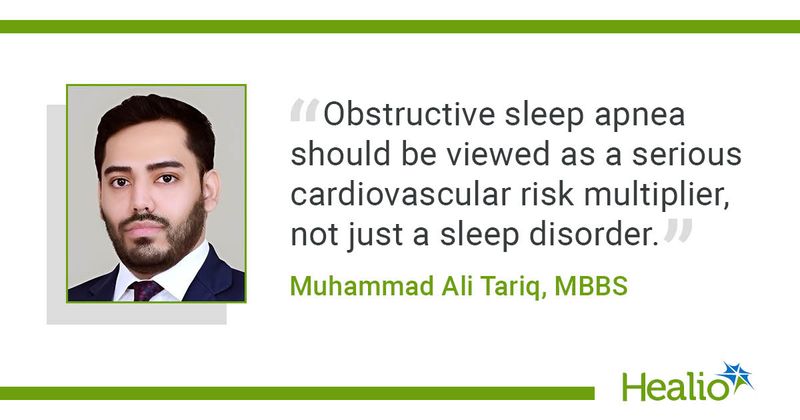
“These findings really emphasize that obstructive sleep apnea should be viewed as a serious cardiovascular risk multiplier, not just a sleep disorder,” Muhammad Ali Tariq, MBBS, physician at Dow University of Health Sciences in Pakistan, told Healio. “In everyday practice, this means being more proactive in identifying patients at high risk for OSA and emphasizing adherence to therapy.

“Expanding access to home sleep testing and telemedicine, especially in rural and underserved areas, is crucial, as the mortality burden in these regions continues to rise,” Tariq said.
In an analysis of the CDC’s WONDER database from 1999 to 2022, Tariq and colleagues evaluated 87,718 deaths related to ischemic heart disease (IHD) among U.S. adults aged at least 25 years with OSA to uncover how mortality has changed over this timeframe.
“We were motivated by the lack of national-level data describing ischemic heart disease mortality among patients with OSA,” Tariq told Healio. “As OSA becomes more common and its cardiovascular effects better recognized, we wanted to quantify long-term mortality trends and highlight key demographic and geographic disparities that could guide more targeted public health interventions.”
In the assessed period, researchers found an average annual rise of 8.81% in the age-adjusted mortality rate (AAMR) per 100,000 population for IHD-related mortality. Notably, the annual AAMR increase was 12.72% from 1999 to 2007 and 6.78% from 2007 to 2022, according to the study.
The location where the greatest proportion of deaths took place was home (42.5%), followed by medical facilities (39.8%), nursing homes/long-term care facilities (10.7%) and hospices (3.1%).
“We were surprised by how sharply the recorded mortality rates have risen, more than a fivefold increase over 2 decades,” Tariq told Healio. “While some of this likely reflects improved clinical recognition and coding of OSA, the sheer volume of deaths remains alarming and points to a growing clinical concern.
“Equally concerning was that over 40% of deaths occurred at home, which suggests that many of these events may have been sudden and unwitnessed, often happening during sleep when OSA-related cardiovascular stress is highest,” he continued.
When divided into subgroups based on sex, race, age and geography, differences in AAMRs emerged. Women and men had a comparable average annual percentage change from 1999 to 2022 (9.43 vs. 9.01), but the overall AAMR per 100,000 population was greater among men vs. women (2.48 vs. 0.71).
In terms of race and ethnicity, four groups were included. The highest overall AAMR per 100,000 was 1.97 among non-Hispanic white adults, whereas the lowest overall AAMR was 0.44 among Asian and Pacific Islanders. In between these two rates were those of non-Hispanic Black/African American adults (1.67 per 100,000) and Hispanic adults (0.87 per 100,000).
From 1999 to 2022, the largest average annual percentage change was observed among non-Hispanic white adults (8.24), followed by Asian and Pacific Islanders (7.77), Hispanic adults (6.96) and non-Hispanic Black/African American (6.71).
Using three age ranges, researchers found that adults aged 75 years and older had an overall AAMR of 6.52 per 100,000, which was greater than the overall AAMRs of those aged 55 to 74 years (2.94 per 100,000) and those aged 25 to 54 years (0.33 per 100,000).
The same pattern was reported when evaluating average annual percentage changes from 1999 to 2022, with the highest change in those aged 75 years and older (10.78), followed by those aged 55 to 74 years (6.39) and those aged 25 to 54 years (5.19).
When looking at overall AAMRs based on urbanization, rural areas had a higher rate than small/medium metropolitan areas and large metropolitan areas (1.74 vs. 1.62 and 1.13; all per 100,000). Similarly, the group with the greatest average annual percentage change from 1999 to 2022 was rural areas (8.58). Small/medium metropolitan areas had the second largest average annual percentage change (8.26), followed by large metropolitan areas (6.94).
Lastly, the census region with the highest overall AAMR per 100,000 was the Midwest (1.85), whereas the region with the lowest overall AAMR was the Northeast (1.06). In between these two rates were those of the West (1.54 per 100,000) and the South (1.32 per 100,000).
From 1999 to 2022, the largest average annual percentage change was observed in the Midwest (6.64), followed by the West (6.51), the Northeast (5.71) and the South (5.29), according to the study.
“Future studies need to link national data with patient-level information such as OSA severity, CPAP adherence and comorbidities to better understand what drives this mortality risk,” Tariq told Healio. “We also need trials to evaluate whether telemedicine and home-based CPAP support can reduce the mortality gaps we observed in rural and underserved communities.”
For more information:
Muhammad Ali Tariq, MBBS, can be reached at alitariq.mbbs@gmail.com.

Ask a clinical question and tap into Healio AI’s knowledge base.
- PubMed, enrolling/recruiting trials, guidelines
- Clinical Guidance, Healio CME, FDA news
- Healio’s exclusive daily news coverage of clinical data