


[ad_1]
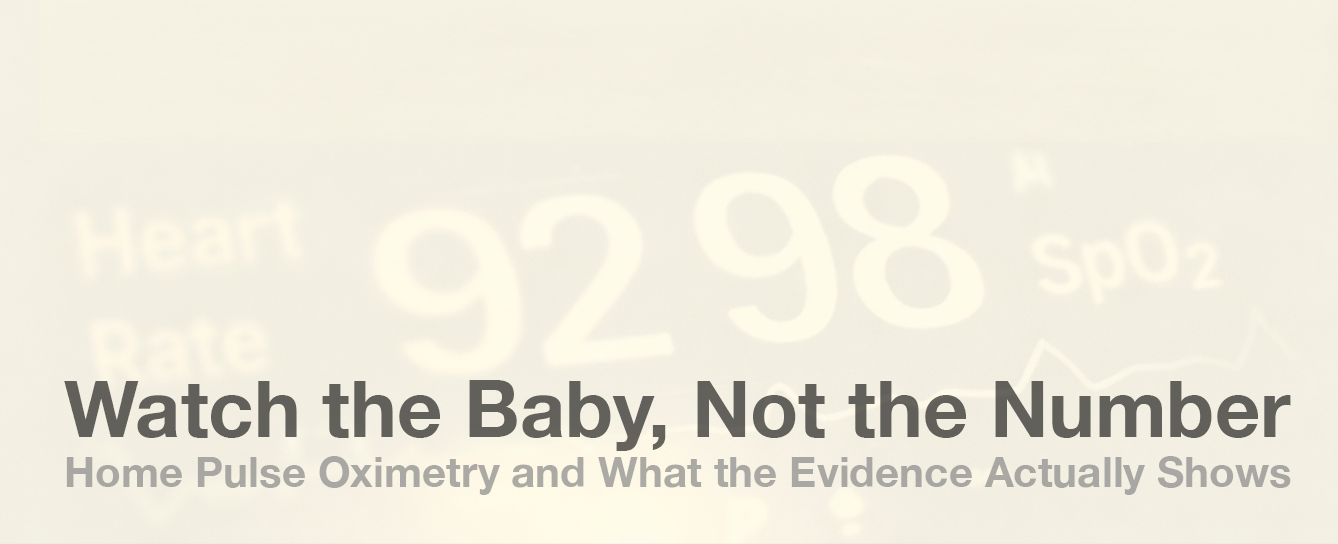
Home pulse oximeters have become increasingly popular among parents of infants with respiratory illnesses, particularly bronchiolitis. They are marketed as tools that improve safety and reassurance. In practice, however, the evidence tells a far more complicated story. Understanding how these devices work, where they fail, and why numbers alone are misleading is essential when counseling families and making clinical decisions.
How pulse oximeters work and why errors are common
Pulse oximeters estimate oxygen saturation (SpO₂) using differential light absorption through tissue. Accuracy depends on stable perfusion, correct sensor placement, minimal motion, and device calibration. Infants represent the worst-case scenario for this technology: small digits, frequent motion, variable perfusion, and rapidly changing respiratory physiology. Importantly, oximeter accuracy deteriorates precisely in the lower saturation ranges that generate the most concern.
Even FDA-approved, hospital-grade pulse oximeters are not gold standards. When SpO₂ values are above approximately 90%, correlation with arterial oxygen saturation is generally within ±2–3 percentage points. Below 90%, performance worsens substantially. Studies demonstrate the greatest bias in the 81–85% range, with mean errors around 6–7%. At saturations ≤85%, even specialized hypoxemia-optimized sensors show that 14–31% of readings differ from arterial values by ≥5 percentage points. This limitation is well recognized in inpatient care and is one reason clinicians never rely on SpO₂ alone when managing bronchiolitis.
Consumer-grade devices
Consumer pulse oximeters are super… variable. In pediatric studies, inexpensive fingertip devices marketed for children showed mean errors around −4.5%, with error ranges exceeding 30% in some cases. Root mean square error approached 8%, rendering individual readings clinically unreliable. Performance was particularly poor in infants and improved only modestly in older children.
Adult consumer fingertip devices performed better, with mean errors under 1% and RMSE around 2–3%, but this was limited to older children with near-normal oxygen saturations (typically 87–99%). These devices were not validated for infants or low saturation ranges, which limits their relevance in bronchiolitis.
Smartphone-integrated oximeters performed worst. Nearly 40% failed to obtain any reading. When readings were obtained, errors ranged from 4% to 17%, with systematic bias: underestimation at lower saturations and overestimation at higher saturations. Infant performance was especially poor.
Across studies, infant age consistently predicts worse performance. Consumer pediatric and smartphone devices perform poorly in infants, while accuracy improves with increasing age and size. Time to successful reading decreases as children get older. This age-related variability alone makes home pulse oximetry a poor screening or monitoring tool in the population most at risk for bronchiolitis complications.
A 5–10% SpO₂ error is not trivial. It can either falsely reassure caregivers when a child is hypoxic or trigger unnecessary ED visits and hospital admissions when a child is clinically stable. Continuous home monitoring has not been shown to reduce serious complications, apnea, or mortality in otherwise healthy infants. What it reliably increases is caregiver anxiety and downstream healthcare utilization.
These findings mirror inpatient bronchiolitis data, where excessive reliance on pulse oximetry has been associated with longer hospital stays and unnecessary oxygen use without improvement in outcomes.
Information for families
Professional societies endorse home pulse oximetry only for select populations, such as children on prescribed home oxygen, and emphasize the need for caregiver education and clinical oversight. Even in these cases, SpO₂ is framed as one component of assessment, not a stand-alone safety metric.

For otherwise healthy infants with bronchiolitis, routine home pulse oximetry is not recommended.
– Brad Sobolewski, MD, MEd
Clinical assessment remains superior to consumer monitoring. Breathing effort, respiratory rate, feeding ability, hydration, color, and overall behavior are far more reliable indicators of deterioration than a single oxygen number from a consumer device. This aligns with evidence-based bronchiolitis management and should be explicitly reinforced during counseling.
Bottom line
Pulse oximetry is an imperfect tool even in controlled hospital settings. Consumer devices introduce substantially greater error, particularly in infants and at lower oxygen saturations. There is no evidence that routine home pulse oximetry improves outcomes in bronchiolitis, and significant evidence that it contributes to false reassurance, unnecessary anxiety, and low-value care. For clinicians, the priority should remain teaching families what to watch, not what to measure.
References
- Kovesi T, Saban J, Haddad JF, et al. The Accuracy of Readily Available Consumer-Grade Oxygen Saturation Monitors in Pediatric Patients. Respiratory Care. 2024;69(4):387-394. PMID: 38164568
- Lipnick MS, Feiner JR, Au P, Bernstein M, Bickler PE. The Accuracy of 6 Inexpensive Pulse Oximeters Not Cleared by the Food and Drug Administration: The Possible Global Public Health Implications. Anesthesia and Analgesia. 2016;123(2):338-45. PMID: 27089002
- Tomlinson S, Behrmann S, Cranford J, Louie M, Hashikawa A. Accuracy of Smartphone-Based Pulse Oximetry Compared With Hospital-Grade Pulse Oximetry in Healthy Children. Telemedicine Journal and E-Health. 2018;24(7):527-535. PMID: 29215972
- Travers CP, Nakhmani A, Armstead KM, et al. Diagnostic Accuracy of an Over-the-Counter Infant Pulse Oximeter for Cardiorespiratory Events. Archives of Disease in Childhood. Fetal and Neonatal Edition. 2025. PMID: 40355254
- Ross PA, Newth CJ, Khemani RG. Accuracy of Pulse Oximetry in Children. Pediatrics. 2014;133(1):22-9. PMID: 24344108
- Fouzas S, Priftis KN, Anthracopoulos MB. Pulse Oximetry in Pediatric Practice. Pediatrics. 2011;128(4):740-52. PMID: 21930554
This post was written by Brad Sobolewski, MD, MEd, and edited with the assistance of ChatGPT (version 5.2).
[ad_2]
Source link