


MDMA-assisted session, patients lie on a couch in a comfortable setting,
often with two trained therapists present. After taking a controlled
dose of MDMA, the patient typically enters an emotionally open state for
several hours. During this time, the therapists guide them in
revisiting traumatic memories, working through emotions and forming new,
less fear-driven perspectives on the trauma. Patients often report that
MDMA helps reduce their anxiety and defenses, allowing them to confront
painful memories without being overwhelmed by panic. The drug can
induce feelings of trust and compassion, which may strengthen the
therapeutic alliance and help patients process experiences that were
previously too painful to discuss. Crucially, MDMA is not a take-home
medication – it is only given under supervision as part of a structured
therapy process, with preparatory sessions beforehand and integration
sessions afterward to help patients make sense of their insights.
Key Findings from MDMA
Trials
High Remission Rates: In Phase 3 studies, roughly 2/3 to 3/4 of PTSD
patients who underwent MDMA-assisted psychotherapy no longer met PTSD
diagnostic criteria at follow-up. This is dramatically higher than
typical remission rates from standard treatments (by contrast,
conventional PTSD therapies succeed in perhaps 30–40% of cases).
Lasting Improvements: Participants treated with MDMA showed not only
immediate symptom relief but also sustained improvement weeks after the
last session. Many reported better emotional regulation and functional
recovery in their daily lives.
Safety in Controlled Settings: When administered in clinical
settings, MDMA did not produce any serious drug-related complications.
There were no signs of addiction or neurotoxicity in the trials. Minor
side effects (fatigue, jaw tightness, etc.) were transient. Careful
screening and monitoring of patients helped mitigate risks such as
temporary increases in heart rate or blood pressure.
Diverse Patient Benefit: These trials
included people with PTSD from various causes – combat veterans, sexual
assault survivors, and others – and showed benefits across demographics.
Notably, the 2023 trial intentionally had a diverse sample (in age,
race, and trauma type) to ensure the treatment works broadly, not just
in a narrow group.
Encouraged by this evidence, researchers and clinicians are optimistic
that MDMA-assisted therapy could represent a major advancement in PTSD
treatment. In the United States, the Food and Drug Administration (FDA)
granted MDMA-assisted PTSD therapy a “Breakthrough Therapy” designation
back in 2017 to fast-track its development. After the recent Phase 3
successes, MAPS Public Benefit Corporation (the organization conducting
these trials) prepared to seek formal FDA approval. If approved, MDMA
could become the first psychedelic drug available by prescription for
psychiatric treatment in the U.S., potentially as soon as within the
next couple of years.
not entirely smooth. Regulators have maintained a cautious stance,
emphasizing the need for rigorous proof. In mid-2024, an independent FDA
advisory committee reviewed the MDMA/PTSD data and unexpectedly voted
against immediate approval of the therapy, citing concerns about study
methodologies and long-term safety monitoring. Some panel experts
pointed to gaps in the data – for example, questions about whether
patients might relapse after longer periods, or how to prevent misuse of
the drug outside of therapy. There were also discussions about ensuring
therapists are properly trained, after isolated reports of misconduct
in earlier experimental sessions raised ethical flags. Following the
committee’s recommendation, the FDA did not approve MDMA in 2024,
instead asking for more information.
While this was a setback for advocates, it
highlights the cautious approach authorities are taking. The consensus
among scientists is that additional research will ultimately address
these concerns. MAPS and other sponsors are now working on expanding
trials and gathering further data, hopeful that approval is a matter of
“when” rather than “if.” In the meantime, MDMA-assisted therapy for PTSD
is edging closer to mainstream acceptance, with many in the medical
community already referring to it as a potential paradigm shift for
trauma treatment.
Psilocybin: Magic Mushrooms
Enter the Fray
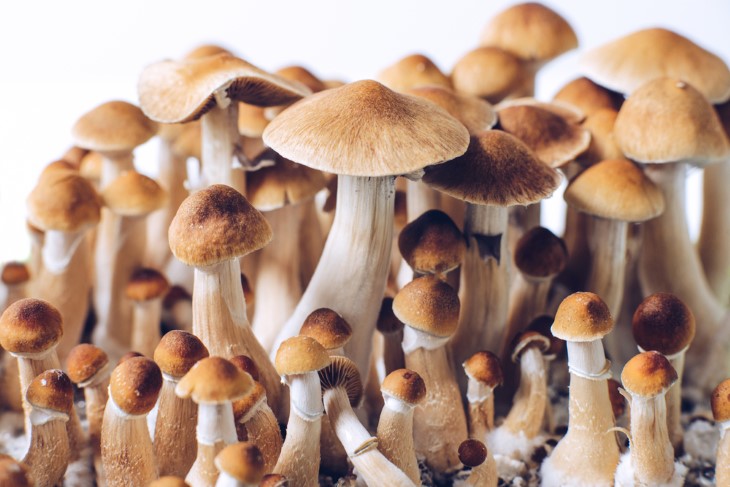
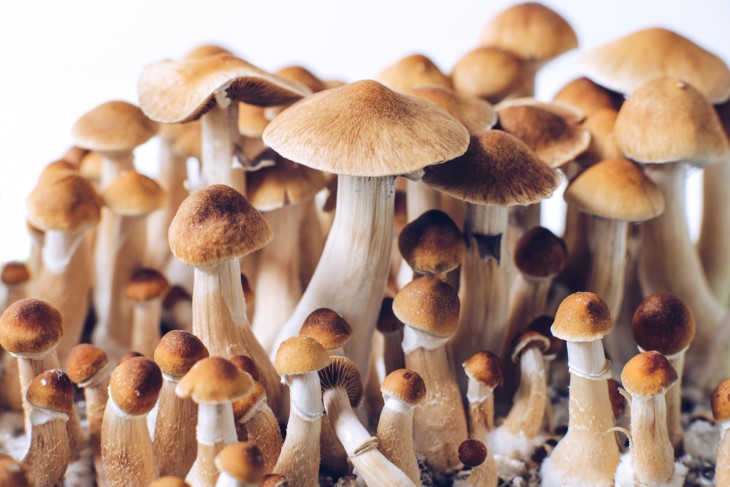
Psilocybin, the psychedelic compound found in certain mushrooms, has a
longer history in Western consciousness – often associated with 1960s
counterculture – but it too has reemerged in labs as a potent
psychiatric tool. In the past few years, psilocybin therapy has shown
remarkable benefits in clinical trials for depression and end-of-life
anxiety. These successes are now spurring exploration of
psilocybin-assisted therapy for PTSD. Could a mushroom trip, carefully
guided by psychotherapists, help heal trauma? Early signs indicate it
just might, though the research is at an earlier stage compared to MDMA.
Scientists theorize that psilocybin’s
effects on the brain – boosting neural connectivity, dampening
overactive fear circuits, and inducing profound shifts in perspective –
could address core aspects of PTSD. During a psilocybin session,
patients often experience a vivid, introspective journey that can
include visual hallucinations and intense emotions. In therapeutic
settings, this “psychedelic trip” is not just mind-expanding for its own
sake; it’s paired with psychotherapy to help the individual
reconceptualize their trauma. Patients often report experiencing new
insights about their life, feeling a release of long-held grief or fear,
and gaining a sense of meaning or connection that was lost due to
trauma. These kinds of transformative psychological experiences might
break the vicious cycle of intrusive memories, hypervigilance, and
emotional numbness that define PTSD.
Formal clinical trials specifically testing
psilocybin for PTSD are now underway. In 2023, researchers at Ohio
State University launched what is believed to be the first U.S. clinical
trial of psilocybin-assisted therapy in military veterans with PTSD.
This pilot study will administer controlled doses of psilocybin to
veterans in combination with psychotherapy, aiming to assess safety and
whether it improves PTSD symptoms. While results from this trial are
still pending, its very existence underscores the growing interest in
psilocybin’s therapeutic potential for trauma. It’s worth noting that,
as of now, no large-scale randomized trial of psilocybin for PTSD has
been completed or published. That means psilocybin’s evidence base for
PTSD is less developed than MDMA’s. Researchers are essentially
extrapolating from adjacent findings – and those findings are
encouraging.
comes from a small 2020 study in San Francisco, which looked at
psilocybin-assisted group therapy in a group of 18 older men who were
long-term AIDS survivors. Many of these men had experienced trauma and
loss during the AIDS epidemic and were suffering from demoralization (a
state of hopelessness often accompanied by PTSD-like symptoms). In the
open-label pilot, participants took a moderate dose of psilocybin in a
group therapy setting. The study found the approach to be feasible and
safe, and the men showed reductions in trauma-related distress scores
after the treatment. Though only a few of the participants had formal
PTSD diagnoses, those who did reported a decline in their PTSD symptom
severity in the months following the psilocybin sessions. This was a
small exploratory study, but it hinted that psilocybin could be applied
to trauma-related conditions and not just depression. It also
demonstrated an interesting model – group therapy – which could make
psychedelic treatment more accessible and affordable if proven
effective.
There is also emerging preclinical evidence
supporting psilocybin for PTSD. In 2024, a study by neuroscientists at
Cornell University showed that psilocybin dramatically enhanced “fear
extinction” in mice. Fear extinction is the process underlying exposure
therapy, where a conditioned fear response is gradually diminished by
repeated safe exposure to the feared cues. In the experiment, mice given
psilocybin were better at letting go of fearful reactions and did not
as easily re-trigger those fears later, compared to mice not given the
drug. Interestingly, the effect only worked when psilocybin was
administered concurrently with the extinction training – suggesting that
the drug by itself isn’t a magic eraser of fear, but it can boost the
therapeutic learning that happens during exposure therapy. This finding
aligns with what we see in therapy: psychedelics seem to act as
catalysts for psychological processes, rather than as standalone cures.
The mouse study’s authors concluded that their data “provide preclinical
evidence to support investigating psilocybin as a pharmacological
adjunct for … therapy for PTSD.”
Of course, what works in mice doesn’t
always translate to humans, but such studies give a mechanistic
rationale for why psilocybin-assisted therapy might help people recover
from trauma.
Currently, several clinical trials are in
the planning or recruiting stages to formally test psilocybin in PTSD
patients. Researchers in the U.S. and Europe are designing studies that
will likely involve a few supervised psilocybin sessions combined with
psychotherapeutic support, similar to the model used for depression
trials. The focus will be on safety (ensuring vulnerable PTSD patients
handle the psychedelic experience without adverse psychiatric events)
and efficacy (measuring reductions in standard PTSD symptom scales in
the weeks and months after treatment). It will likely be a couple of
years before these studies report results. If those results are
positive, psilocybin could follow a trajectory akin to MDMA’s –
progressing into larger trials, potentially receiving special regulatory
designations to speed development, and eventually seeking approval as a
treatment for PTSD.
It’s important to emphasize that
psilocybin, like MDMA, is not simply about “drugging away” the memories
of trauma. The therapeutic context is key. Experts describe psilocybin
treatment as an active collaboration between the medicine and therapy.
Patients often engage in intensive therapy sessions before a psilocybin
experience to set intentions and build trust with their providers. The
psilocybin session itself can last 6 to 8 hours, during which patients
might confront deep personal issues (with therapists guiding them
through emotional turbulence). Follow-up integration therapy helps
translate the often abstract or symbolic journey into concrete changes
in outlook and behavior. In essence, the drug opens a window of mental
flexibility and emotional release, and therapy helps the patient make
constructive use of that window for healing. This synergy is why
professionals refer to it as psilocybin-assisted therapy rather than
just psilocybin drug treatment.
Global Momentum in Western Countries
While research into MDMA and psilocybin for PTSD is happening around the
world, the Western nations have led much of the recent progress. The
United States has been at the forefront, with organizations like MAPS
coordinating multi-site trials across North America and Israel. American
universities (from California to Maryland) have opened dedicated
psychedelic research centers, and the U.S. Department of Veterans
Affairs is closely watching (and in some cases participating in) studies
to address PTSD in combat veterans. Although U.S. federal law still
classifies both MDMA and psilocybin as Schedule I substances (illegal
drugs with no accepted medical use), the FDA has been willing to allow
and even facilitate clinical trials under strict protocols. As noted,
the FDA gave Breakthrough Therapy status to MDMA-assisted PTSD therapy,
recognizing its potential to outperform existing treatments. More
recently, the agency has also designated psilocybin as a breakthrough
therapy for major depression, which, while a separate indication,
underscores a regulatory openness to psychedelics. As of early 2025,
MDMA-assisted therapy is on the cusp of FDA approval pending further
evidence, and if it clears that bar, it could pave the way for
psilocybin to follow in subsequent years.
Canada is also embracing the psychedelic
therapy renaissance, albeit in a controlled manner. Health Canada has
approved numerous clinical trials involving MDMA or psilocybin for
mental health conditions, including PTSD research collaborations with
MAPS. In 2020, Canadian authorities granted a handful of
compassionate-use exemptions that allowed PTSD patients and others with
serious conditions to receive psilocybin-assisted therapy outside of
trials – the first such exemptions in decades. In 2022, Canada’s federal
government took a further step by resuming its Special Access Program
for psychedelics. This program lets doctors apply for permission to use
an otherwise illegal drug like MDMA or psilocybin when conventional
treatments have failed and a clinical trial is not available. Through
this pathway, a small number of Canadian patients with PTSD (often
veterans or first responders) have been able to legally undergo
psychedelic therapy in the past couple of years. The Canadian medical
community, including nonprofits and some veterans’ groups, has been
actively lobbying for expanded access. In late 2023, a Senate
subcommittee on veterans’ affairs released a report titled “The Time is
Now,” urging the government to fund large-scale research into
psychedelic-assisted therapy for PTSD and to make these treatments more
accessible to veterans in need. This indicates a high-level recognition
in Canada of the promise that MDMA and psilocybin hold for addressing
the mental health crisis among trauma survivors.
Across Europe, interest in MDMA and
psilocybin for PTSD is growing, though policy changes have been slower.
Several European research teams have collaborated in the international
trials (for instance, clinical sites in Spain and Israel contributed
patients to the MAPS studies). The European Medicines Agency has not yet
formally evaluated MDMA or psilocybin therapy for approval, but it is
monitoring the ongoing trial data. Countries like the United Kingdom
have launched their own research initiatives: Imperial College London
and King’s College London have been leaders in psychedelic science,
primarily focusing on depression but laying the groundwork for PTSD
applications.
scientific briefing acknowledging that “hundreds of participants” have
been studied in psychedelic therapy trials for PTSD with promising
results – but also noting that more large trials are needed and that
psychedelics should not yet be considered proven first-line treatments.
Continental Europe’s first dedicated PTSD psychedelic trials are
expected to start soon; for example, researchers in the Netherlands have
announced plans for an MDMA trial in Dutch veterans, and a team in
France is exploring a psilocybin study for trauma-related depression.
Public attitudes in Europe are cautiously warming. Whereas a decade ago
psychedelics were mostly taboo, now conferences on psychedelic therapy
draw participants from major European hospitals and universities. Still,
regulatory agencies in Europe will likely wait for the final results of
U.S. trials and an FDA decision before considering approval on their
soil. In the meantime, Europe is carefully watching the North American
experience.
entirely: Australia made headlines as the first nation to officially
recognize MDMA and psilocybin as medicines. In a surprise decision
announced in February 2023, Australia’s Therapeutic Goods Administration
(TGA) approved the controlled medical use of MDMA for PTSD and
psilocybin for treatment-resistant depression. As of July 2023,
authorized psychiatrists in Australia can prescribe MDMA-assisted
therapy to patients with PTSD, and psilocybin therapy for those with
severe depression. This regulatory leap, which came before FDA approval
in the U.S., was based on the positive results emerging from clinical
trials worldwide and the pressing need for better treatments. The TGA
stressed that this is not a blanket legalization – the drugs are
reclassified as Schedule 8 (controlled medicines) only for specific uses
and only by specially approved physicians.
compassionate access scheme within a research framework, ensuring
therapy is done in a “strictly controlled medical setting”. By being
first, Australia aims to both help patients sooner and gather real-world
data about how these therapies perform outside of clinical trials.
Early reports from Australian clinics (which started treating a small
number of patients in late 2023) suggest cautious optimism, though
scaling up access has been slow due to the limited number of authorized
prescribers and the need for extensive psychotherapy resources. The
Australian move is being closely watched by other countries as a
potential model. If it succeeds in demonstrating safety and
effectiveness on a larger scale, it could embolden regulators elsewhere
to follow suit.
A Cautious Optimism
The renaissance of MDMA and psilocybin in psychiatry represents a
radical shift in how we think about treating PTSD. For patients who have
often tried every available therapy – from antidepressants to exposure
therapy – and still struggle daily with flashbacks, nightmares, and
emotional numbness, the idea of finding relief in a few guided
psychedelic sessions can sound nothing short of miraculous. The personal
stories emerging from the trials are indeed powerful: survivors of war
or abuse who say that, after MDMA-assisted therapy, they feel “the
weight lifted” for the first time in decades, or individuals who,
through a psilocybin journey, make peace with past trauma and rediscover
joy. These narratives, paired with rigorous trial data, have begun to
chip away at the stigma surrounding psychedelics.
However, experts maintain a careful
optimism. Psychedelic therapy is not a magic wand. It requires an
infrastructure of trained therapists, medical oversight, and aftercare
that must be developed alongside any loosening of drug regulations. The
experiences catalyzed by MDMA or psilocybin can be intense and
emotionally challenging; without proper support, there’s a risk of
adverse psychological reactions. Moreover, long-term outcomes still need
study – for example, do the improvements from these therapies last for
years, or will some patients need booster sessions? How do these
treatments compare head-to-head with established PTSD therapies like
trauma-focused CBT or EMDR in the long run? These questions are the
subject of ongoing research.
There are also considerations of who gets
access. Psychedelic therapies, at least initially, could be expensive
and limited to specialized clinics. Advocates are pushing to ensure
equitable access for populations like veterans and first responders, who
bear a heavy burden of PTSD. In the U.S., the Veterans Affairs
healthcare system has begun training some of its clinicians in
psychedelic-assisted therapy in anticipation of future approval, and
some veteran nonprofits are already facilitating legal treatments in
countries where it’s allowed. In Canada, as mentioned, lawmakers are
actively discussing how to integrate psychedelics into mental health
services. And in Europe, early dialogue is happening about regulating
these therapies through healthcare systems if and when they are
approved.
From a scientific standpoint, what’s
striking is how quickly the field is evolving. Fifteen years ago,
discussing MDMA or “mushrooms” as medicine for PTSD would have been
unthinkable in mainstream psychiatry. Now, thanks to meticulous
research, these substances are at the cutting edge of psychiatric
innovation. The journey has involved unlikely alliances: grass-roots
advocacy groups teaming up with top-tier academic institutions, and
formerly skeptical regulators engaging with counterculture icons turned
researchers. The result is a growing consensus that we may be on the
verge of a paradigm shift in trauma therapy. If MDMA and psilocybin
continue to prove their worth, future PTSD treatment might look very
different – shorter in duration (a matter of sessions rather than years
of pills), more holistic in approach (addressing emotional and spiritual
healing, not just symptom control), and fundamentally rooted in the
brain’s capacity to rewire and heal itself under the right conditions.
In summary, the recent global advancements
in using MDMA and psilocybin for PTSD have transformed what was once a
fringe idea into a legitimate area of medical science. The Western
world, particularly the U.S., Canada, and parts of Europe, has driven
this progress through high-quality research and a cautious loosening of
regulations. Patients and clinicians alike are watching this space with
hopeful eyes. For those suffering the invisible wounds of trauma, new
treatments cannot come soon enough. And for science, the coming years
will be critical to validate whether these psychedelic-assisted
therapies can indeed fulfill their promise: turning harrowing journeys
of the mind into pathways toward healing.