





Kettlebell training has become one of the most effective and time-efficient ways to build total-body strength, muscle definition, and cardiovascular conditioning. When combined with the proven principle of progressive overload, kettlebell workouts can deliver exceptional results for men looking to gain lean muscle, burn fat, and improve athletic performance without spending hours in the gym. A progressive overload kettlebell full body workout challenges every major muscle group while gradually increasing training demands so your body is forced to adapt and grow stronger over time.
This guide breaks down everything you need to know about progressive overload kettlebell training, including how it works, why it’s effective, and how to structure a full body kettlebell workout that produces real, measurable results. Whether you train at home or in the gym, this approach helps you maximize strength, hypertrophy, and endurance using minimal equipment.
What Is Progressive Overload in Kettlebell Training?
Progressive overload is the gradual increase of stress placed on the body during training. In kettlebell workouts, this doesn’t just mean lifting heavier weights. It also includes increasing reps, sets, workout density, tempo control, range of motion, or overall training volume.
Because kettlebells are highly versatile, they lend themselves perfectly to progressive overload methods. You can challenge your muscles through explosive movements, controlled tension, unilateral loading, and full-body coordination. Over time, these incremental increases push your muscles, joints, and nervous system to adapt, resulting in improved strength, muscle growth, and work capacity.
Why Kettlebells Are Ideal for Progressive Overload Full Body Workouts
Kettlebells offer a unique advantage over traditional barbells and machines. Their offset center of mass forces greater muscle engagement, especially in the core, stabilizers, and grip. This makes each repetition more demanding and functional.
A progressive overload kettlebell full body workout allows you to train multiple movement patterns at once, including hinging, squatting, pushing, pulling, rotating, and carrying. Instead of isolating muscles, kettlebells encourage integrated strength development that translates directly to real-world performance and athletic ability.
Benefits of Progressive Overload Kettlebell Full Body Training
Builds Lean Muscle Without Excess Bulk
Kettlebell training emphasizes time under tension and total-body engagement, which helps build dense, functional muscle rather than bulky mass. Progressive overload ensures muscle fibers are continually stimulated for growth.
Improves Strength and Power Simultaneously
Explosive movements like swings, cleans, and snatches develop power, while presses, squats, and rows increase raw strength. Progressive overload ensures both qualities improve together.
Enhances Fat Loss and Conditioning
Full body kettlebell workouts elevate heart rate while building muscle, creating a powerful metabolic effect. As overload increases, calorie burn and fat loss improve without sacrificing strength.
Saves Time While Maximizing Results
A single kettlebell session can train your entire body in under an hour. Progressive overload ensures each workout remains challenging and productive.
Key Principles of Progressive Overload for Kettlebells
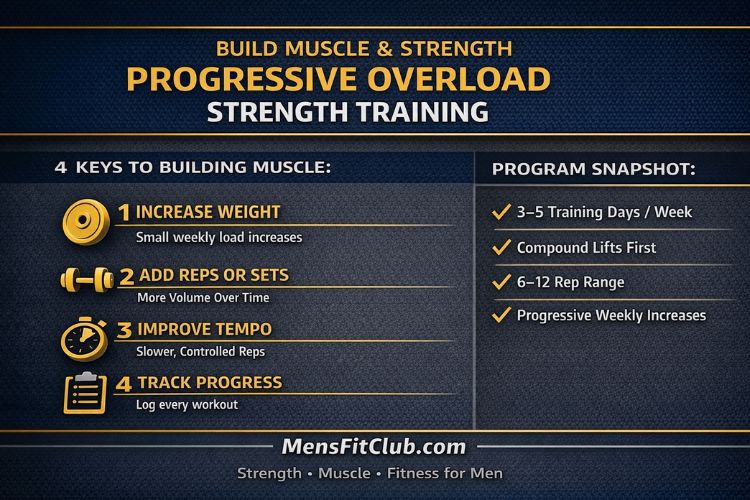
Increase Weight Gradually
When possible, move up to a heavier kettlebell while maintaining proper form. Even a small increase in weight can significantly raise training demand.
Add Repetitions or Sets
If heavier kettlebells aren’t available, increasing reps or sets is an effective overload strategy. This increases total volume and muscular endurance.
Reduce Rest Periods
Shortening rest time increases workout density, forcing your cardiovascular system and muscles to adapt.
Improve Movement Quality and Control
Slowing down tempo, increasing range of motion, or improving unilateral balance adds overload without adding weight.
How Often to Train Full Body Kettlebell Workouts
Most men benefit from performing a progressive overload kettlebell full body workout 2 to 4 times per week. This frequency allows enough stimulus for muscle growth while still providing adequate recovery.
Beginners should start with two full body sessions per week. Intermediate and advanced trainees can increase to three or four sessions depending on recovery capacity and goals.
Progressive Overload Kettlebell Full Body Workout Structure
Warm-Up Phase
A proper warm-up prepares your joints, muscles, and nervous system for intense training. Focus on mobility, activation, and light movement.
Main Strength and Power Phase
This phase includes compound kettlebell exercises that target multiple muscle groups. Progressive overload is applied through weight, volume, or intensity.
Conditioning and Finisher Phase
High-intensity kettlebell circuits push endurance and fat loss while reinforcing movement patterns.
Progressive Overload Kettlebell Full Body Workout Plan
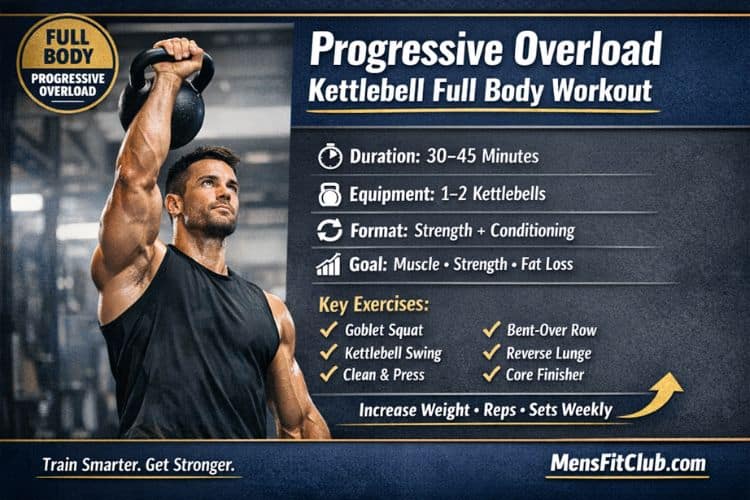
Exercise 1: Kettlebell Goblet Squat
Goblet squats target the quads, glutes, core, and upper back. Holding the kettlebell in front increases core engagement and posture control.
Perform controlled repetitions, gradually increasing weight or reps each week to overload the lower body.
Exercise 2: Kettlebell Swing
The kettlebell swing is a foundational movement that builds explosive hip power, glute strength, and cardiovascular endurance. Progressive overload can be achieved by increasing swing volume, reducing rest, or using a heavier kettlebell.
Exercise 3: Kettlebell Clean and Press
This compound movement trains the shoulders, arms, legs, and core while developing coordination and power. Progressive overload comes from adding reps per set or transitioning to a heavier kettlebell.
Exercise 4: Kettlebell Bent-Over Row
Rows strengthen the upper back, lats, and biceps while improving posture. Increasing tempo control and unilateral loading adds effective overload.
Exercise 5: Kettlebell Reverse Lunge Full Body Progressive Overload Workout
Lunges build single-leg strength, balance, and glute activation. Holding the kettlebell in different positions increases difficulty without changing load.
Exercise 6: Kettlebell Russian Twist or Windmill
Core-focused movements strengthen rotational stability and spinal control. Progressive overload is applied through slower tempo and longer sets.
Weekly Full Body Progressive Overload Workout Example
Week 1: Establish Baseline
Focus on perfect form and moderate volume. Choose a kettlebell weight that challenges you without compromising technique.
Week 2: Increase Volume
Add one extra set or a few additional reps per exercise while keeping weight constant.
Week 3: Increase Intensity
Move to a heavier kettlebell or shorten rest periods to increase training density.
Week 4: Deload or Refine Technique
Reduce volume slightly to allow recovery while improving movement quality before restarting the progression.
Nutrition Tips to Support Full Body Progressive Overload Workout Training
Progressive overload demands adequate nutrition to support recovery and muscle growth. Prioritize protein intake to repair muscle tissue and include complex carbohydrates to fuel intense training sessions. Healthy fats help support joint health and hormone production.
Hydration is equally important, especially during high-intensity kettlebell workouts that elevate heart rate and body temperature.
Common Mistakes to Avoid in Full Body Progressive Overload Workout
Increasing Weight Too Quickly
Progressive overload should be gradual. Jumping to heavier kettlebells without mastering form increases injury risk.
Ignoring Recovery
Full body kettlebell workouts are demanding. Rest days and proper sleep are essential for adaptation.
Neglecting Warm-Ups
Skipping warm-ups limits performance and increases the chance of joint strain or muscle pulls.
Who Should Use Full Body Progressive Overload Workouts?
This training method is ideal for men who want a balanced approach to strength, muscle building, and conditioning. It works well for beginners learning movement patterns and advanced lifters seeking a minimalist but effective program.
Progressive overload kettlebell training is especially effective for busy individuals who want maximum results with minimal equipment and time investment.
Long-Term Results of Full Body Progressive Overload Workout Training
When applied consistently, progressive overload kettlebell full body workouts lead to steady strength gains, improved muscle definition, enhanced cardiovascular endurance, and better overall movement quality. The combination of functional strength and conditioning creates a physique that looks strong and performs even better.
Unlike short-term fitness trends, progressive overload provides a sustainable framework for long-term progress. As long as you continue to challenge your body intelligently, results will continue to follow.
Why Full Body Progressive Overload Kettlebell Workout Training Works
A progressive overload kettlebell full body workout is one of the most efficient and effective training methods available today. It combines strength training, hypertrophy, conditioning, and functional movement into a single system that adapts with you over time.
By applying progressive overload principles and staying consistent, you can build muscle, burn fat, and improve athletic performance using just a kettlebell and a smart training plan. This approach fits perfectly into a modern, results-driven fitness lifestyle and delivers lasting benefits for both body and performance.