



December 30, 2025
5 min read

Key takeaways:
- Nephrology nurses have unique practice demands and a specialized skillset.
- Health leaders must collectively prioritize nurses’ well-being, recognizing that a strong, supported workforce results in better clinical outcomes.
In the past decade, we have seen tremendous advances in the prevention, treatment and management of chronic kidney disease from modalities like hemodiafiltration to therapeutics that slow disease progression.
We are also witnessing the integration of artificial intelligence and other technologies that are poised to transform how we deliver care.

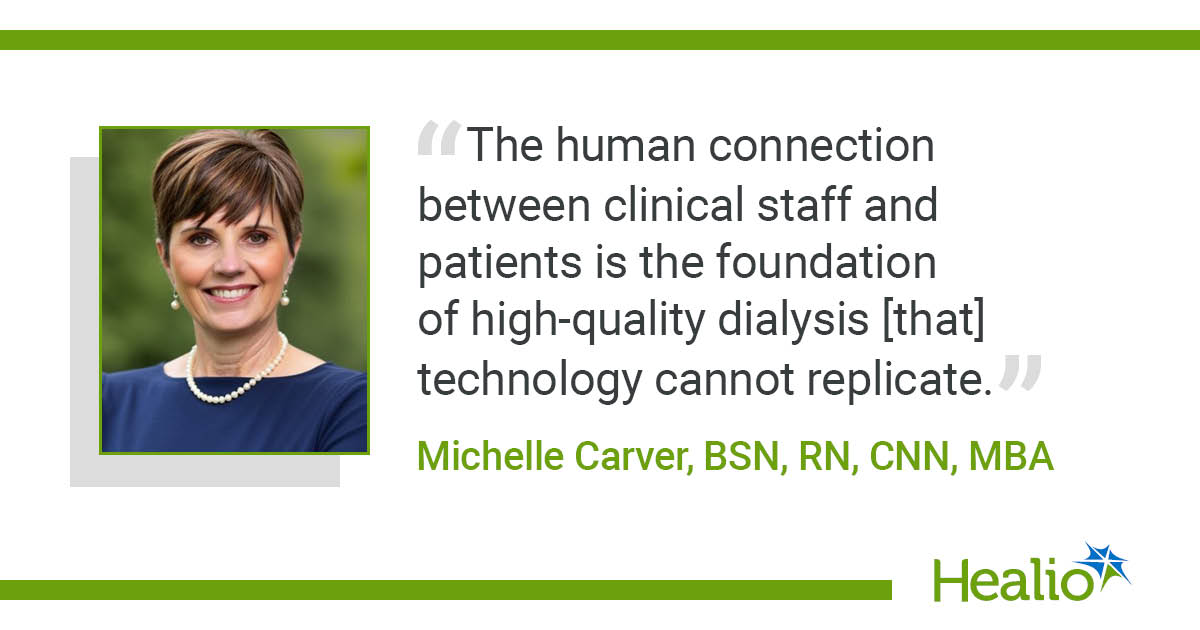
Despite remarkable innovation in kidney care, one truth remains: The human connection between clinical staff and patients is the foundation of high-quality dialysis and is something technology cannot replicate.
More than 30 years ago, I started my nursing career, first in acute care before transitioning to dialysis care. I quickly realized I loved being a nephrology nurse. I got to know my patients and their families on a much deeper level. After spending hours with them each week, often for years, I felt deeply invested in their entire health journeys. Their challenges were my challenges, and their success meant my success. Few other health care settings offer this level of connection, and it shapes how we deliver care every day.
While nephrology care is inherently collaborative, nurses play a central role. Early mornings, frequent patient visits and complex care coordination demand physical stamina and emotional resilience. This includes nurses who support patients and their care partners at home, coaching them through treatments that are both technically complex and emotionally demanding. These experiences foster a profound sense of connection and responsibility that is unique to nephrology nursing.
Unlike many nurses or clinicians who support patients during short-term health events, nephrology nurses often become part of their patients’ lives for years. They witness lives unfold, seeing children graduate from high school, get married, welcome their first grandchildren. Over time, care teams become part of the extended “family” that supports patients through their entire care journey.
Supporting and uplifting nurses enables them to use their compassion, skill and dedication to the fullest degree, all of which are vital to the patient experience and positive clinical outcomes.
As leaders in nephrology, we have an important role to play in fostering resilience, recognizing the unique demands of dialysis care and implementing systemic interventions that promote health care worker well-being. By prioritizing the health and success of the nursing workforce, we ensure that the human element of care continues to thrive and benefit both nurses and the patients they serve.
Recognizing unique demands of dialysis care
Caring for people with kidney disease requires a specialized skillset. Nephrology nurses must carry a knowledge base that ensures they can provide care for patients at various stages of their lifespan. They master multiple modalities of therapy in various health care settings, from in-center dialysis to supporting patients who dialyze at home.
Nephrology nurses collaborate closely with other members of the kidney care team, including physicians, patient care technicians, social workers and registered dietitians, to provide holistic and personalized patient care.
Because of these unique demands, nephrology nursing offers opportunities to tailor workforce development, recruitment, retention and growth strategies that reflect the realities of this work. Many of these strategies are rooted in the human element of care delivery, which is something health care leaders must continue to prioritize to advance quality care.
Fostering resilience through growth
Resilience, or the psychological ability to adapt to challenges and adjust to demands, is a necessary skill for any nurse. After the acute phase of the COVID-19 pandemic, much of the discussion around nurse resilience focused on self-care and personal well-being. While well-intentioned, this placed the burden of implementing resilience-building strategies on individual nurses rather than their teams and employers. Building a positive work environment is key to fostering resilience among clinical staff.
As Chief Nursing Officer and Senior Vice President of Nursing and Clinical Services at Fresenius Kidney Care, part of Fresenius Medical Care (FME), my job is to empower our clinical staff who provide patient care, including our nurses. I take our commitment to the well-being of our nurses as seriously as our commitment to exceptional care for our patients.
In my work, I have found that creating a positive work environment goes beyond daily operations. It is about advancing the long-term growth of our employees, honing the skills and expertise they already possess to bolster their sense of purpose and resilience. At our U.S. centers, for example, we offer a host of programs for current and future nurses, including:
- a Clinical Advancement Program which rewards nurses who provide advanced clinical practice;
- tuition assistance through our Go4RN Program for clinical staff pursuing additional education;
- a nurse residency program offers holistic training for pre-licensed nurses; and
- a membership program with the American Nephrology Nurses Association to promote continuing education.
Fostering professional growth and creating a positive work environment empowers nurses to provide exceptional care while reinforcing their sense of purpose and resilience so they are better equipped to tackle complex patient needs and sustain high-quality care over the long term.
This commitment to growth and innovation is especially critical as we prepare to introduce hemodiafiltration (HDF) across our U.S. centers in 2026. Nurses will be central to this transition, not only in delivering the therapy, but in guiding patients through the change, answering questions and offering reassurance throughout the process. Their ability to build trust and provide compassionate, personalized care will be essential to the success of this rollout.
HDF also creates new opportunities for nurses to expand their clinical leadership and expertise. As care teams adopt this advanced therapy, nurses will be trained to manage new workflows, monitor patient responses and collaborate closely with physicians to tailor treatment plans. This evolution in care delivery reinforces the leadership role nurses play in driving innovation and improving outcomes, while also reinforcing the human connection that defines high-quality dialysis care.
Implementing systemic interventions
While individual nurses and their employers can and must work together to foster resilience, we also recognize that strengthening the nephrology workforce requires action across the entire health care system. We are deeply committed to supporting our nurses, but we know lasting change will come when health leaders collectively prioritize nurses’ well-being, recognizing that a strong, supported workforce results in better clinical outcomes.
The coming “silver tsunami” will bring a growing population of older adults, who make up a large proportion of those living with chronic kidney disease. Combined with rising rates of people with risk factors like diabetes and obesity, demand for dialysis services will continue to increase significantly.
Meeting this demand means ensuring the nursing workforce keeps pace. At a national level, expanding and supporting nurse workforce development programs is essential to building a robust pipeline of nephrology nurses. At an organizational level, employers must remain steadfast in investing in professional growth and systemic support for nurses.
Taken together, the efforts of individual nurses, employers and health leaders can promote resilience within the workforce that delivers high-quality dialysis care. We must be committed to doing our part, working alongside partners across the health care industry, to ensure our nurses have the support they need to provide the compassionate, life-sustaining care patients with kidney disease deserve. It will require all of us to uphold this necessary human element in the delivery of care.
For more information:
Michelle Carver is chief nursing officer and senior vice president of nursing and clinical services at Fresenius Kidney Care. She can be reached at michelle.carver1@freseniusmedicalcare.com.
Sources/Disclosures
Source:
Expert Submission
Disclosures:
Carver reports being an employee of Fresenius Kidney Care, part of Fresenius Medical Care.

Ask a clinical question and tap into Healio AI’s knowledge base.
- PubMed, enrolling/recruiting trials, guidelines
- Clinical Guidance, Healio CME, FDA news
- Healio’s exclusive daily news coverage of clinical data