



December 03, 2025
10 min read
Key takeaways:
- The most consequential conversations at Behavioral Health Tech 2025 were not about new apps.
- Conversations focused on trust, measurement that changes decisions and AI that serves, not surveils.
Midway through the Behavioral Health Tech 2025 conference in San Diego, Chris DeCou, PhD, director of Amazon Health Benefits, put up a slide that made the room go quiet.
It showed that once monthly peer support calls were associated with a 48% reduction in relapse.

A few sessions later, Duke Margolis policy experts and youth advisors told a standing-room crowd that teens want AI they could text at 11 p.m. when no adult was available, but they definitely do not want chatbots pretending to be their therapists.
I spent a decade helping build collaborative care into primary care at Kaiser Permanente Oakland, then as the first clinical leader at Headspace (formerly Ginger), and another decade running a measurement-based psychiatry practice in San Francisco.
I came to BHT 2025 less interested in which apps looked newest, and more curious about three questions:
- What payers will actually pay for;
- what AI safety leaders will green light; and
- what kinds of workflows real clinics can sustain without burning out the people doing the work.
Across payer panels, health system case studies and AI safety sessions, the same themes surfaced repeatedly: trust and lived experience as designed infrastructure, measurement that drives clinical decisions rather than dashboards, and AI quietly working as a “hidden intern” rather than center stage.
That convergence, not any single product, is where psychiatry’s new operating system is taking shape.
Trust and lived experience
The most striking pattern at BHT 2025 was how often peers, family partners and youth themselves anchored the programs that showed real outcome gains, especially for serious mental illness and substance use disorders.
In “Delivering Evidence Based Mental Health Benefits at Scale,” DeCou made the case that peer contact is not a soft add-on but a high-yield, low-cost benefits design choice that employers and health plans can structure and pay for.
In another substance use program featuring at home sobriety testing paired with peer support, leaders reported an approximate 34% reduction in total spend and roughly half as many hospital admissions, with net promoter scores in the high 80s, numbers you usually see in consumer tech, not chronic disease management.
The serious mental illness panel “Beyond Band Aids: Transforming SMI Care,” which featured speakers from Author Health, CVS Aetna, Cambridge Health Alliance, Valera and Otsuka, offered a similar message in a different population.
One treatment-first, wraparound model reported that approximately 77% of participants maintained sobriety, employment and housing at 1 year. That outcome was attributed not to a new medication but to sustained engagement, practical support for housing and income, and the deliberate inclusion of peers and family partners as paid, structured members of the care team.
Youth and family sessions like “It Takes a Village,” with organizations such as Day One, Centene and Here Now, emphasized another dimension of trust: not forcing adolescents and caregivers to retell their trauma histories at every handoff. Speakers argued that trauma-informed design now extends to data flows and shared care plans, not only to what is said in the therapy room.
In youth-focused AI discussions, teen advisors made their boundaries clear. They were willing to use AI as a bridge when no human was available, but they wanted transparency about when they were interacting with AI versus a person, and they wanted a fast route to a real clinician if things felt wrong.
Policy experts from Duke Margolis underscored that no generative AI mental health tools currently have regulatory approval as treatments, and that transparency — about what is AI mediated, how data are used, and when humans take over — is essential if technology is to enhance rather than erode trust.
For clinicians, the practical takeaway is that trust is becoming an operational variable you can design for, with peer and family roles built into workflows, trauma-informed handoffs engineered into data systems, and plain language AI and data consent that frontline staff is comfortable delivering.
Measurement grows up
Measurement-based care has been discussed for years. What felt different in San Diego was how specific people were about which measures, for whom, and what happens when numbers move.
In “Measure What Matters,” panelists from Brightside, Stanford and the National Committee for Quality Assurance (NCQA) argued that PHQ9 and GAD7 remain foundational but are insufficient on their own.
These panelists made the case for adding brief, standardized measures of functioning such as the WHODAS 2.0 along with structured capture of patient-defined goals, whether that is keeping a job, resuming caregiving, or sleeping through the night.
Alliance and engagement metrics were also discussed as essential context for interpreting symptom change, particularly for populations with chronic or recurrent conditions.
A companion session, “Measure Up! Why Policy Must Drive Measurement Based Care,” brought in voices from the Meadows Mental Health Policy Institute such as Clare McNutt, PA-C, MSHS, senior vice president for health integration, along with NCQA and plan leaders.
Here, the emphasis was on convergence rather than proliferation with a smaller set of standardized measures, calculated the same way across plans and programs, so that clinicians and organizations can trust comparisons and contracts.
Examples included payment arrangements where a per member per month increase is tied to a one-point improvement in PHQ9 over a defined window, and value-based models that reward reductions in medical length of stay or emergency department visits when behavioral conditions are effectively managed.
Payer medical leaders like Taft Parsons III, MD, chief psychiatric officer at CVS/Aetna, Ann O’Grady, LCSW, behavioral health director at Independence Blue Cross, and Nicole Stelter, PhD, LMFT, director of behavioral health clinical strategy and programs at Blue Shield of California are among those now shaping how these metrics show up in benefit design and provider contracts.
If your PHQ9 and WHODAS trends don’t change, what you do in the next visit or the next month — if they don’t trigger outreach when risk rises or prompt a conversation about stepping up care when function drops — are they really measurement-based care, or just extra paperwork?
Several clinical programs showed what it looks like when measurement logic is embedded directly into care pathways.
In “Scaling Behavioral Health Without Scaling Costs,” Rogers Behavioral Health described using patient-reported outcomes and predictive models to estimate the likelihood of remission 1 to 3 months out. When those models suggest a patient is drifting away from recovery, the system does not just update a dashboard. It triggers outreach, case review or a change in treatment intensity.
In a separate track on digital therapeutics and new CMS codes, Big Health and Cleveland Clinic presented data suggesting that FDA-cleared digital cognitive behavioral therapy for insomnia can save roughly $2,000 per patient per year compared with untreated insomnia, and that behavioral comorbidities add 3 to 5 days to medical hospital stays when left unaddressed.
With new Medicare G codes (G0552–G0554) creating national reimbursement pathways for digital mental health interventions, these numbers start to look less like pilot curiosities and more like the beginnings of an economic language that connects psychiatry, health systems and payers.
For frontline psychiatrists, the practical implication is that measurement-based care is shifting from a compliance exercise to clinical and financial infrastructure. The emerging pattern is to pair symptom scales like PHQ9 and GAD7 with a brief functional assessment and explicit patient goals, track these longitudinally and define simple triggers such as a certain increase in scores, a drop in function or missed visits that prompt outreach or stepped up care rather than passive documentation.
AI as the hidden intern class
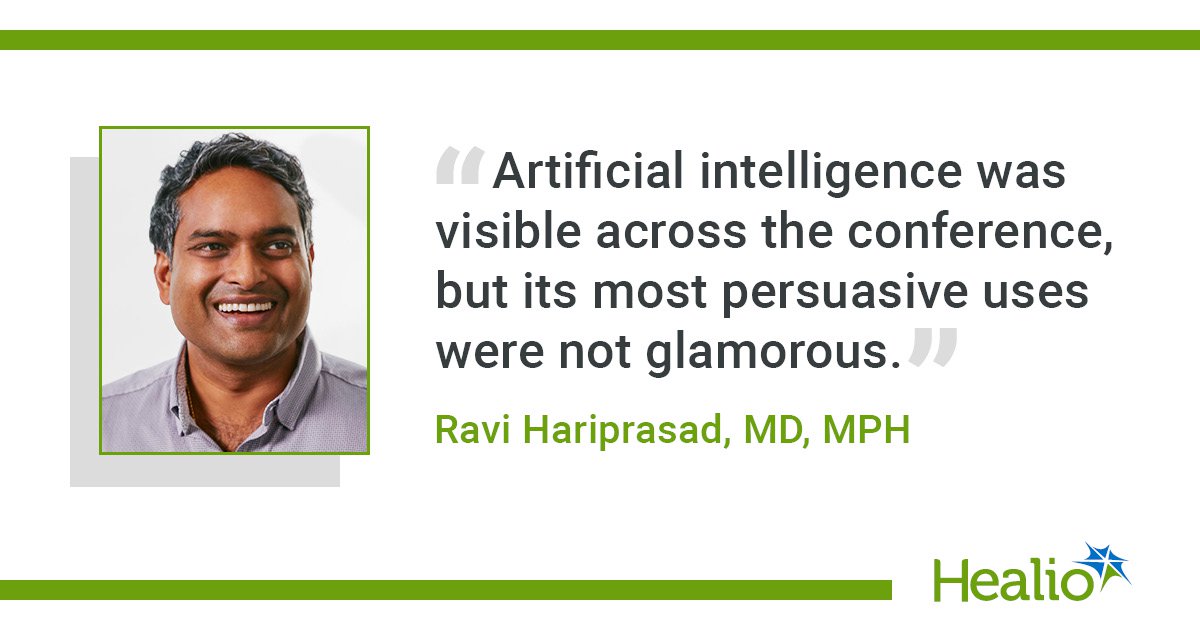
AI was visible across the conference, but its most persuasive uses were not glamorous. They were the places where AI quietly took on the role of a very capable, very supervised intern: taking notes, asking initial screening questions, sorting patterns in data and checking documentation.
In “Help Wanted: AI and the Behavioral Health Workforce,” clinicians from Motivo, St. Luke’s, Upheal and Wisdo described ambient AI tools that listened in on therapy sessions and drafted clinical notes.
In some deployments, self-reported daily documentation time dropped from roughly 3 hours to closer to 30 minutes, with more than 80% of therapists reporting less burnout and about 88% saying they felt more emotionally attuned to patients once they were no longer splitting their attention between the patient and the keyboard.
Success depended heavily on how deeply these tools were integrated into the existing electronic health record, how easy it was for clinicians to edit and approve notes, and how clearly patients were informed and allowed to opt out.
Infrastructure tools like Supanote are now combining ambient note generation with revenue cycle management, using AI to align documentation with appropriate billing codes while reducing frontline administrative load. Others, such as Charta Health, focus on AI-assisted chart auditing by scanning notes and codes for inconsistencies or missed opportunities, with human reviewers in the loop.
On the access side, Rogers Behavioral Health, working with partners like Limbic and CPC Integrated Health, reported that within approximately a year, AI agents were handling around half of screenings, with overall patient satisfaction in the mid-80% range.
In some programs, patients from minority and historically underserved groups were more likely to disclose sensitive symptoms and concerns to the AI-mediated intake pathway than to rushed human gatekeepers.
However, panelists repeatedly emphasized the guardrails, including explicit consent about AI involvement, visible and reliable escalation pathways when risk indicators appeared, and clear boundaries between AI suggestions and human clinical decisions.
In earlier work, I’ve called this a “learn together” model. Clinicians, patients and AI each contribute different kinds of intelligence, but authority over safety, prioritization, and adaptation stays with the human clinician. It was striking in San Diego how many serious programs now implicitly follow that pattern, even if they never name it that way.
AI safety and validation were not afterthoughts. Researchers and clinical leaders working across institutions like Stanford and on external AI safety councils stressed that there is still no regulatory approval for generative AI as a mental health treatment.
These experts encouraged a disciplined focus on infrastructure use cases with documentation support, intake triage suggestions and population analytics and called for continuous validation of models in the populations where they are deployed.
For psychiatrists evaluating any AI tool, a useful set of questions emerged:
- Does this give me back at least 30 to 60 minutes per day, net of new hassles?
- Can I see and edit everything that goes into the record under my name?
- Do my patients clearly know when they’re interacting with AI versus a human?
- What happens when it’s wrong? Who catches that, and how often is it audited?
AI that meets those standards feels like an extra pair of hands or eyes. AI that does not tends to contribute to the same moral injury that has accompanied previous waves of poorly designed health technology.
Distributed, team-based psychiatry
A fourth through-line at BHT 2025 was the recognition that the “site” of psychiatry is no longer limited to the specialty clinic. Your role in that network, not just the number of patients on your panel, determines your leverage and sustainability.
Panels with leaders from Cleveland Clinic, MultiCare and Molina described primary care as the de facto home for much mild to moderate behavioral health, with collaborative care models, embedded therapists and psychiatric consultation as the main levers for access.
In “Beyond the Referral Black Hole,” speakers were candid that physical colocation without shared workflows and data is a half measure. Warm handoffs, shared notes in the EHR, defined consult channels and structured feedback back to referrers were presented as the elements that actually change outcomes and clinician experience.
Large health systems such as Geisinger contributed examples from the specialty side. In “Keeping It Real with Geisinger,” presenters described tripling outpatient behavioral health capacity and still failing to fully meet demand, which pushed the organization to adopt registry-driven panels, group-based interventions, and explicit targets, such as aiming for at least 20% of psychotherapy volume via groups rather than only one-to-one sessions.
Rural-focused sessions with Frontier Psychiatry, Mercy and Groups Recover Together showed how telepsychiatry hubs, nurse-led and peer-led programs and medication for opioid use disorder delivered via group and hybrid models are being used to stretch limited psychiatric expertise across vast geographies.
Listening to Geisinger, Rogers, and rural programs describe registry-driven panels, stepped care and team-based outreach, I heard the same population workflows many of us have been building manually for years at places like Kaiser and Headspace, but now with AI finally available to handle some of the invisible coordination work that used to require heroics or fall through the cracks.
Youth and college mental health sessions including “Carolina Blues” highlighted a similar dynamic in a different demographic. Campus counseling centers and pediatric clinics are seeing demand that far exceeds available clinicians, leading to experiments with digital therapeutics, peer programs and stepped-care models in which psychiatrists consult on the most complex cases and treatment-resistant trajectories while others on the team provide structured, protocol-guided care.
Employer-oriented panels, touching on topics like United Airlines’ substance-use benefits and obesity programs integrating GLP1 medications with behavioral support, reinforced that large employers are increasingly willing to fund integrated behavioral-health access including family-wide benefits when they can see measurable impacts on retention, safety, and total cost of care.
Taken together, these examples point toward a model in which one psychiatrist, supported by a team and effective infrastructure, should be able to sustain high-quality longitudinal relationships with far more people than a lone-clinician, crisis-only model allows.
The math will look different in each setting, but the conceptual shift is consistent with psychiatrists as high-leverage members of distributed teams, not isolated specialists handling a narrow panel in serial 20minute visits.
Three filters to use
For practicing psychiatrists reading about BHT 2025 from a distance, it can be hard to know what to do with yet another wave of technology promises and policy diagrams. Across sessions and conversations, three filters emerged that may be useful for evaluating any new model, tool or contract that lands on a clinician’s desk.
First, trust. Does the program or technology measurably build or quietly erode trust and engagement, particularly for patients with serious mental illness, substance use disorders, youth, or good historical reasons to distrust institutions?
That can look like funded peer and family roles, trauma-informed data sharing and handoffs, and plain-language AI and data consent that frontline staff are comfortable delivering.
Second, measure. Does the approach produce symptom, function and goal data that clearly change treatment decisions, not just populate dashboards? That means pairing tools like PHQ9 and GAD7 with functional measures and explicit goals, tracking them over time, and defining what outreach, review or treatment change happens in response to deteriorating trajectories, rather than simply documenting them. It also means asking payers and partners to be transparent about which outcomes matter to them and how they will be calculated.
Third, define AI’s role. Does any AI involved genuinely free clinician attention and improve safety, or does it add noise and risk? Clinicians can reasonably expect AI to show its work, be editable, be disclosed to patients and live within clear boundaries and monitoring structures.
Tools that meet those expectations are more likely to feel like an extra pair of hands or eyes. Those that do not are more likely to contribute to the same moral injury that has accompanied previous waves of poorly designed technology.
Next steps
As a member of the Healio Psychiatry Peer Perspective Board and as someone now building AI-supported care orchestration tools at Zenara Health, I left BHT 2025 less dazzled by any single product and more encouraged by the convergence.
Payers, health systems and innovators are finally speaking a compatible language about trust, measurement and human-in-the-loop AI. The work ahead is to implement that wisely in real clinics, so the next generation of behavioral health tech serves the same purpose that drew many of us into psychiatry in the first place: reducing suffering without losing the soul of the work.
Sources/Disclosures
Source:
Expert submission
Disclosures:
Hariprasad reports no relevant financial disclosures.

Ask a clinical question and tap into Healio AI’s knowledge base.
- PubMed, enrolling/recruiting trials, guidelines
- Clinical Guidance, Healio CME, FDA news
- Healio’s exclusive daily news coverage of clinical data