
The thyroid is a gland inside of our necks,
just below the Adam’s apple (in men), which is an incredibly important
part of our endocrine (hormonal) system that helps regulate our
metabolism, manages protein synthesis, growth and more. Of course, just
because it affects mainly physiological processes in the body doesn’t
mean it ends there, as energy production through metabolism has a
profound effect on our brains.
Around one in eight people have a thyroid disorder. Of these, a majority
are unaware they have it, and a huge majority are women. Why are women
more susceptible? Because most thyroid disorders are caused by
autoimmune diseases, which disproportionately affect women. Because
thyroid problems often have numerous nonspecific symptoms, they are very
easily misdiagnosed.
1. Hypothyroidism
in reduced activity in the thyroid gland. Because one of the main
functions of the thyroid is regulating metabolism, an underactive gland
causes slower metabolism. This, in turn, may cause inexplicable
weight-gain, loss of appetite, constipation, dry and flaky skin, hair
thinning, sensitivity to cold and depression.
In developing countries, the leading cause
for hypothyroidism is a lack of dietary iodine, while in developed
countries, hypothyroidism is typically associated with an autoimmune
disease.
As you can probably tell by the name, this
condition is the opposite of hypothyroidism and describes an overactive
thyroid gland. Unsurprisingly, the symptoms of hyperthyroidism are
nearly an exact mirror image of hypothyroidism: weight loss that is not
tied to diet or activity and paired with an increased appetite, frequent
diarrhea, irritability, confusion, an increased heartbeat, hand
tremors, heat intolerance, sleep disorders, and mood swings.
Like hypothyroidism, the chief culprit behind hyperthyroidism are
autoimmune diseases, and so it affects females to a much greater extent
than men, but it also appears to be hereditary and can be caused by too
much iodine in the diet.
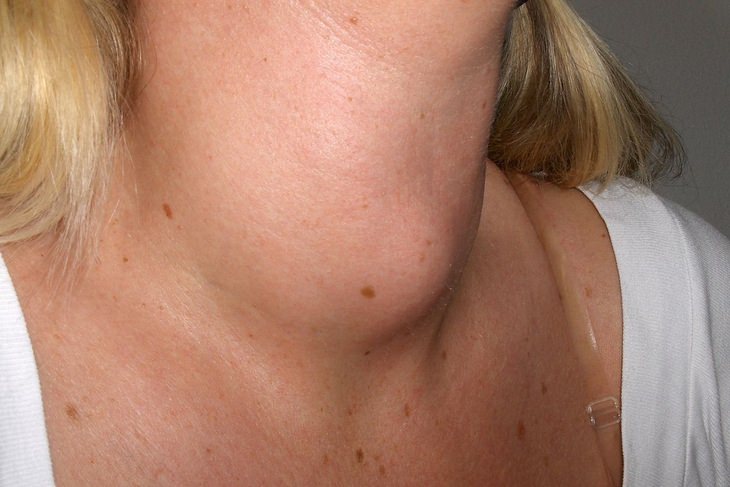
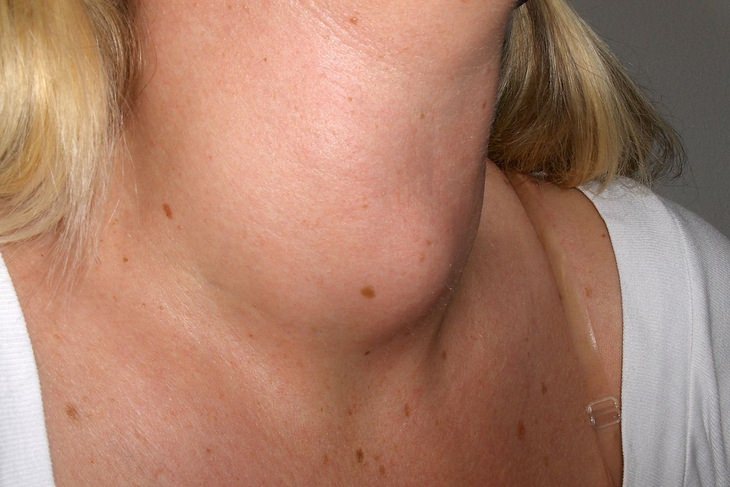
itself, goiter is a symptom of other thyroid diseases. Goiter is a
swelling of the neck due to an enlarged thyroid gland which can be
caused by any thyroid disorder, but not having goiter doesn’t rule out a
thyroid disorder.
It can present itself as a slight swelling
of the neck, as a grapefruit-size globular swelling, or as several
smaller balls in the neck. Goiter is typically painless, but a large
goiter can make eating and breathing difficult.
Thyroid storm is a rare and
life-threatening complication of an overactive thyroid
(hyperthyroidism), which causes high fever, vomiting, and hypertension
in early stages, followed by dramatically low blood pressure and
circulatory shock in later stages. Thyroid storm could result in heart
failure or heart attack.
related to the thyroid, such as blood poisoning, fever, dehydration and
more. People are at larger risk of a thyroid storm if they leave their
hyperthyroidism untreated or if they discontinue their hyperthyroidism
treatment.
5. Hashimoto’s disease
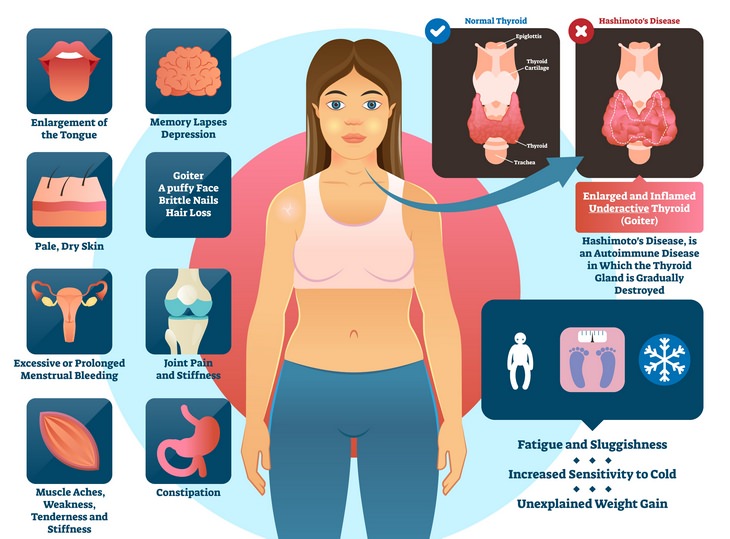
Perhaps the leading cause of hypothyroidism
in the west is Hashimoto’s disease, an autoimmune disease that causes
the immune system to actively attack the thyroid gland. Though this may
cause swelling in the thyroid (and goiter as a result), the overall
effect is a gradual shrinking of the thyroid until its destruction.
As an autoimmune disease, Hashimoto’s disease is more common among
people who suffer from other autoimmune diseases, specifically type 1
diabetes, celiac disease, vitiligo, and alopecia, but it is also genetic
and could be inherited.
6. Grave’s disease
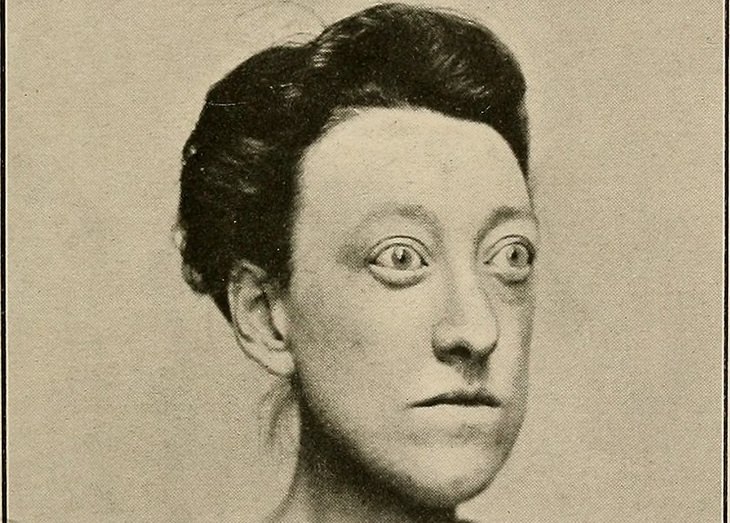
Another autoimmune disease, Graves’ is the
most common cause behind hyperthyroidism and can be initially triggered
by stress, infection or childbirth. Additional symptoms of Graves’ are
discolored, swollen shins with lesions or nodules, as well as eyes that
bulge out.
Much like Hashimoto’s, people suffering from a preexisting autoimmune
disease are more likely to develop Graves’ disease, and conversely,
those with Graves’ are more likely to develop unrelated autoimmune
conditions. There also appears to be a genetic factor.
7. Thyroid nodules

The most common thyroid problem and the
cause of the least concern are nodules in the thyroid gland. These can
be asymptomatic and imperceptibly small or present as lumps in the
throat. In the case of goiter, one or more lumps are indicative of
nodules. Only 5% of thyroid nodules are malign.
Problems swallowing or speaking and a hard, immobile lump are more
indicative of malignancy, while a family history of autoimmune diseases
and thyroid conditions accompanied by a nodule that is soft and painful
are all signs of the nodule being benign.
Thyroid nodules are extremely common, with about 50% of people having a
nodule at some point in their life. Other thyroid conditions, such as
Hashimoto’s and Graves’ will often cause nodules as well.
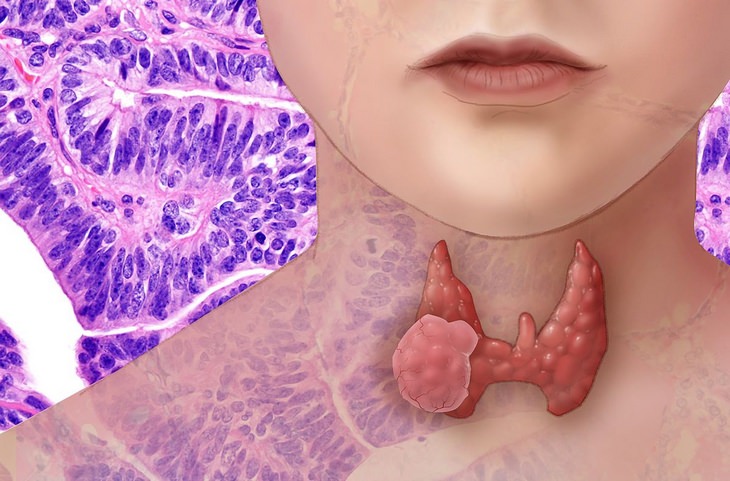
Most types of thyroid cancer have an
excellent prognosis and are very manageable, as they do not tend to
metastasize. Though not overly common, diagnosed cases are on the rise,
but that may very well be due to better detection, rather than the
cancer being on the rise.
The lack of detection in the past may be due to a lack of complaints
from patients, who did not realize something was wrong to begin with.
There are four types of thyroid cancer:
Papillary
Follicular
Medullary
Anaplastic.
fast-acting and metastasizing type of cancer, is of great concern. For
the other three types of cancer, the survival rate over five years is
90% and 84% over ten years.