




A 30 minute beginner full body calisthenics workout is one of the most effective ways to start building strength, improving endurance, and burning fat—without stepping into a gym. Calisthenics uses your own bodyweight as resistance, making it ideal for beginners who want a simple, safe, and highly effective training routine. Whether your goal is weight loss, muscle tone, or general fitness, this workout format helps you train your entire body in a short amount of time.
In this guide, you’ll learn exactly how to structure a 30 minute beginner calisthenics workout, which exercises to perform, how to progress safely, and why bodyweight training is one of the best ways to build long-term fitness. This routine is perfect for men starting their fitness journey, busy professionals, or anyone looking for a no-equipment full body workout they can do anywhere.
What Is a Beginner Full Body Calisthenics Workout?
A beginner full body calisthenics workout is a structured training session that targets all major muscle groups using bodyweight exercises. Unlike weightlifting, calisthenics focuses on natural movement patterns such as pushing, pulling, squatting, lunging, and core stabilization.
For beginners, calisthenics workouts emphasize proper form, controlled tempo, and gradual progression. This approach reduces injury risk while building a strong foundation of strength, balance, and coordination.
A 30 minute session is long enough to stimulate muscle growth and fat loss while remaining manageable and sustainable. This makes it ideal for beginners who may struggle with longer or more complex training routines.
Why 30 Minutes Is Perfect for Beginners
Thirty minutes is the sweet spot for beginner workouts because it balances effectiveness and recovery. Shorter workouts often lack sufficient volume, while longer sessions can lead to fatigue and poor technique.
A 30 minute beginner full body calisthenics workout allows you to warm up properly, perform multiple compound movements, and finish with core and conditioning work—all without overwhelming your nervous system.
This time frame also fits easily into busy schedules, making it easier to stay consistent. Consistency is the key factor in achieving long-term fitness results, especially for beginners.
Benefits of Beginner Calisthenics Training
Calisthenics training offers a wide range of benefits, particularly for beginners who want a functional, athletic body without complicated equipment.
One major benefit is full body strength development. Bodyweight exercises engage multiple muscle groups at once, helping you build balanced strength across your upper body, lower body, and core.
Calisthenics also improves joint health and mobility. Movements like squats, push-ups, and planks train your muscles while reinforcing proper joint alignment and control.
Another advantage is fat burning. When performed in a circuit or timed format, calisthenics workouts elevate your heart rate, turning strength training into a metabolic workout that burns calories efficiently.
Perhaps most importantly, calisthenics builds confidence. As you master your own bodyweight, you’ll gain a sense of control and athleticism that carries over into everyday life.
Who This Workout Is For
This 30 minute beginner full body calisthenics workout is designed for men and women who are new to exercise or returning after a long break. It’s also ideal for individuals who want a home workout routine without equipment.
If you’ve struggled with gym intimidation, lack of time, or inconsistent motivation, calisthenics provides a low-barrier entry point to fitness. You can perform this workout in your living room, backyard, or hotel room with minimal space.
The exercises in this routine are scalable, meaning you can modify them to match your current fitness level and progress at your own pace.
How to Structure a 30 Minute Beginner Calisthenics Workout
A well-designed 30 minute beginner full body calisthenics workout follows a simple structure that maximizes results while minimizing injury risk.
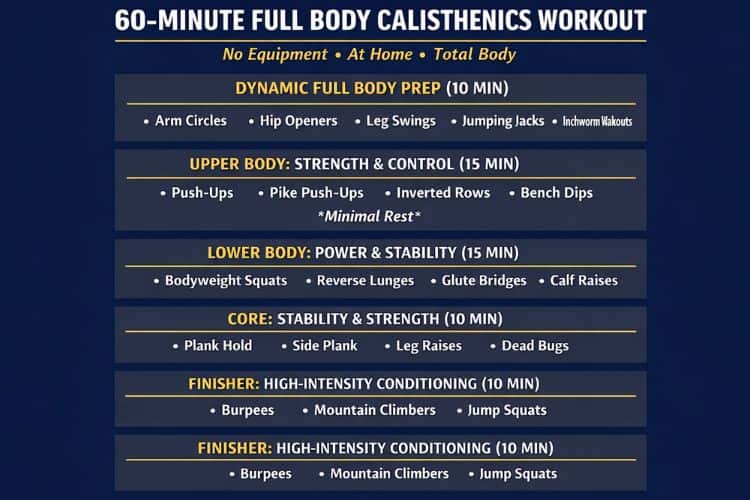
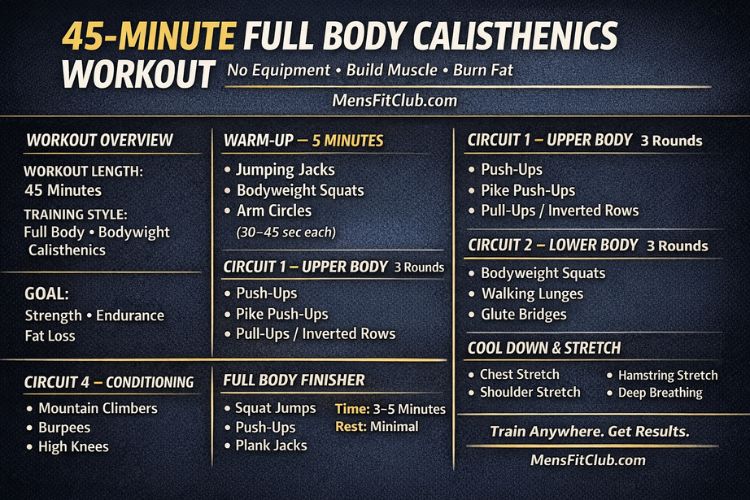
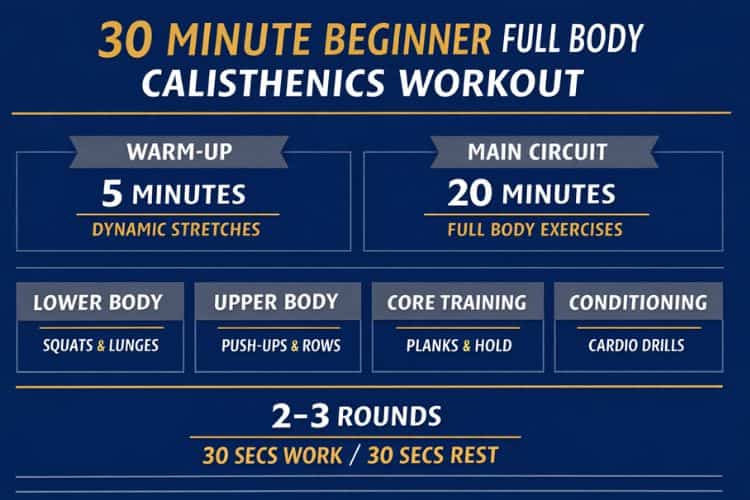
The workout should begin with a dynamic warm-up to prepare your muscles and joints. This is followed by a main workout circuit that targets the entire body. The session ends with a short finisher or core segment to reinforce stability and endurance.
This structure keeps your workout organized, efficient, and beginner-friendly.
Warm-Up: Prepare Your Body for Movement
A proper warm-up is essential for beginners. It increases blood flow, improves mobility, and reduces the risk of injury during your workout.
Spend the first five minutes performing light, dynamic movements such as arm circles, hip rotations, bodyweight squats, marching in place, and gentle torso twists. These movements help activate your muscles and mentally prepare you for exercise.
Warming up properly allows you to perform each calisthenics exercise with better form and greater confidence.
The Main Workout: Full Body Calisthenics Circuit
The core of this 30 minute beginner full body calisthenics workout consists of fundamental movements that target every major muscle group. Each exercise should be performed with controlled form and steady breathing.
Lower Body Exercises
Lower body exercises form the foundation of calisthenics training. Bodyweight squats are one of the most effective beginner movements, targeting your quadriceps, glutes, and hamstrings. Focus on pushing your hips back and keeping your chest upright as you lower into the squat.
Reverse lunges are another excellent beginner exercise. Stepping backward instead of forward reduces stress on the knees while still engaging the legs and glutes. These movements also improve balance and coordination.
Upper Body Push Movements
Push-ups are a cornerstone of calisthenics workouts. Beginners can start with incline push-ups or knee push-ups to build strength gradually. Push-ups target the chest, shoulders, triceps, and core, making them one of the most efficient bodyweight exercises.
Maintaining a straight body line and engaging your core throughout the movement is crucial for maximizing results and preventing injury.
Upper Body Pull Alternatives
While calisthenics pull movements typically require equipment, beginners can still simulate pulling actions using bodyweight rows under a table or towel rows anchored to a door. These exercises strengthen the back, shoulders, and arms while improving posture.
Developing pulling strength is essential for shoulder health and balanced upper body development.
Core and Stability Exercises
Core training is a vital component of any beginner calisthenics workout. Planks are one of the best exercises for building core stability without excessive spinal movement.
Begin with short plank holds and focus on keeping your hips level and core tight. As your strength improves, you can increase hold duration or add variations.
Sample 30 Minute Beginner Full Body Calisthenics Workout
This routine is structured to keep intensity manageable while delivering full body results.
Start by performing each exercise for 30 to 40 seconds, followed by 20 to 30 seconds of rest. Complete the circuit two to three times depending on your fitness level.
The workout may include bodyweight squats, push-ups, reverse lunges, incline rows, planks, and standing marches or step-backs for light conditioning.
This format keeps your heart rate elevated while allowing adequate recovery between movements.
Proper Rest and Recovery for Beginners
Rest is just as important as training, especially for beginners. Allow at least one rest day between full body calisthenics workouts to give your muscles time to recover and adapt.
Quality sleep, hydration, and proper nutrition also play a major role in recovery. As your fitness improves, you’ll notice less soreness and faster recovery times.
Listening to your body is crucial. Mild muscle soreness is normal, but sharp pain or joint discomfort should not be ignored.
How Often Should Beginners Do Calisthenics?
Beginners should aim to perform a full body calisthenics workout two to four times per week. This frequency provides enough stimulus for progress without overwhelming the body.
On non-training days, light activities such as walking, stretching, or mobility work can enhance recovery and overall fitness.
Consistency matters more than intensity. Sticking to a realistic schedule is the fastest way to see results.
Progression Tips for Beginner Calisthenics
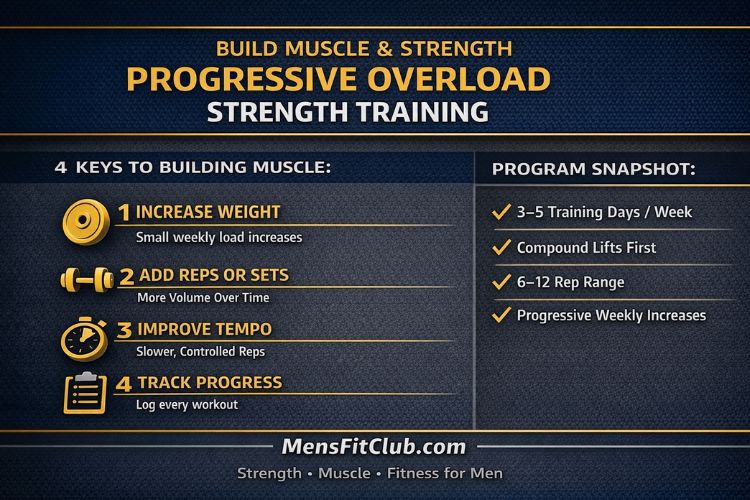
Progression is essential for long-term improvement. Beginners can progress by increasing repetitions, extending exercise duration, or reducing rest time between movements.
Another effective progression strategy is upgrading exercise variations. For example, transitioning from incline push-ups to standard push-ups increases difficulty while reinforcing proper mechanics.
Tracking your workouts helps you stay motivated and ensures steady improvement over time.
Common Beginner Full Body Calisthenics Mistakes to Avoid
One common mistake beginners make is rushing through exercises. Proper form should always take priority over speed or repetitions.
Another mistake is skipping the warm-up or cool-down. These components are critical for injury prevention and recovery.
Finally, beginners often underestimate the importance of rest. Training every day without adequate recovery can lead to burnout or injury.
Nutrition Tips to Support Calisthenics Training
Nutrition plays a vital role in maximizing the results of your 30 minute beginner full body calisthenics workout. Consuming enough protein supports muscle repair and growth, while carbohydrates provide energy for training.
Staying hydrated improves performance and reduces fatigue. Even mild dehydration can negatively impact your workout quality.
Simple, whole-food meals are often the best choice for beginners, as they provide essential nutrients without unnecessary complexity.
Why Beginner Full Body Calisthenics Is Ideal for Long-Term Fitness
Calisthenics is more than just a beginner workout option—it’s a lifelong training method. As you progress, bodyweight exercises can become increasingly challenging and athletic.
Advanced calisthenics skills such as pull-ups, dips, and handstands build incredible strength and control. Starting with a beginner routine lays the foundation for these advanced movements.
Because calisthenics requires minimal equipment, it’s one of the most sustainable and accessible fitness approaches available.
The 30 Minute Beginner Full Body Calisthenics Workout
A 30 minute beginner full body calisthenics workout is one of the most effective ways to build strength, burn fat, and improve overall fitness without complicated equipment or gym memberships.
This workout style emphasizes functional movement, balanced muscle development, and long-term sustainability. By focusing on consistency, proper form, and gradual progression, beginners can achieve impressive results in a relatively short amount of time.
If you’re looking for a simple, efficient, and beginner-friendly workout routine, calisthenics is an excellent place to start. Commit to your training, trust the process, and enjoy the journey toward a stronger, healthier body.